Annapurna Base Camp Trek: Complete Guide, Cost and Itinerary 2026
You have been thinking about the Annapurna Base Camp Trek for a while. Maybe since you first saw a photograph of that 360 degree amphitheater of peaks and wondered what it would feel like to stand inside it rather than look at it on a screen. This guide answers every question you have before that moment arrives — the real cost, the honest difficulty rating, the day by day itinerary, the best time to go, and what nobody else tells you about what the trail actually feels like on Day 4 when the bamboo forest closes in and the valley narrows and the mountains ahead begin to take up more and more of the sky.
Everything here comes from years of guiding trekkers through the Annapurna Sanctuary on routes we know the way a musician knows a favorite piece — not just the notes but the silences between them.
What is the Annapurna Base Camp Trek
The Annapurna Base Camp trek is an 11 day journey through the Annapurna Conservation Area in western Nepal, rising from the subtropical hills of Nayapul through dense rhododendron and bamboo forest into the high glacial valley that opens, at 4,130 metres, into one of the most extraordinary mountain settings accessible to a non-technical trekker anywhere on earth.
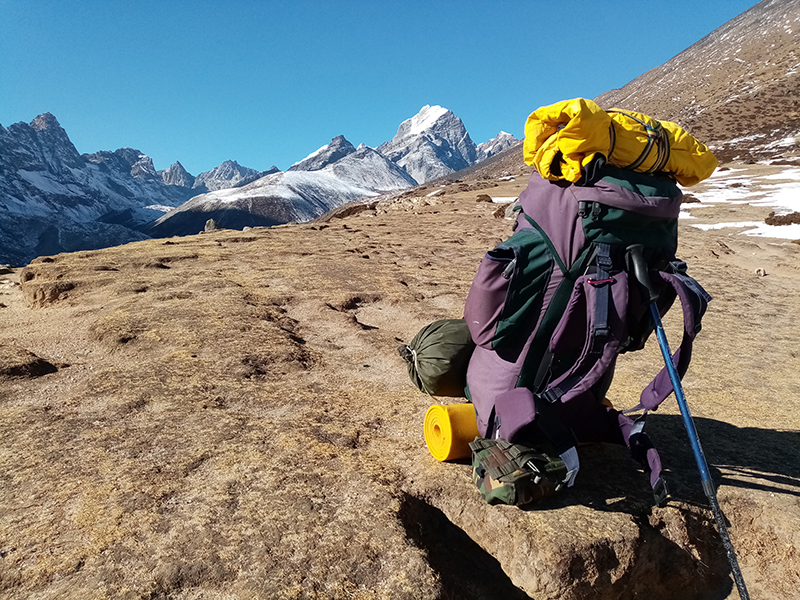
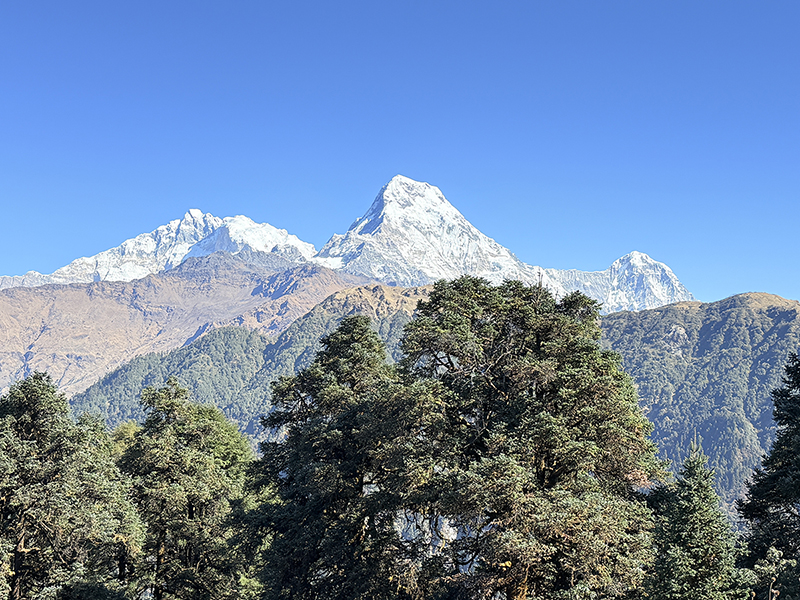
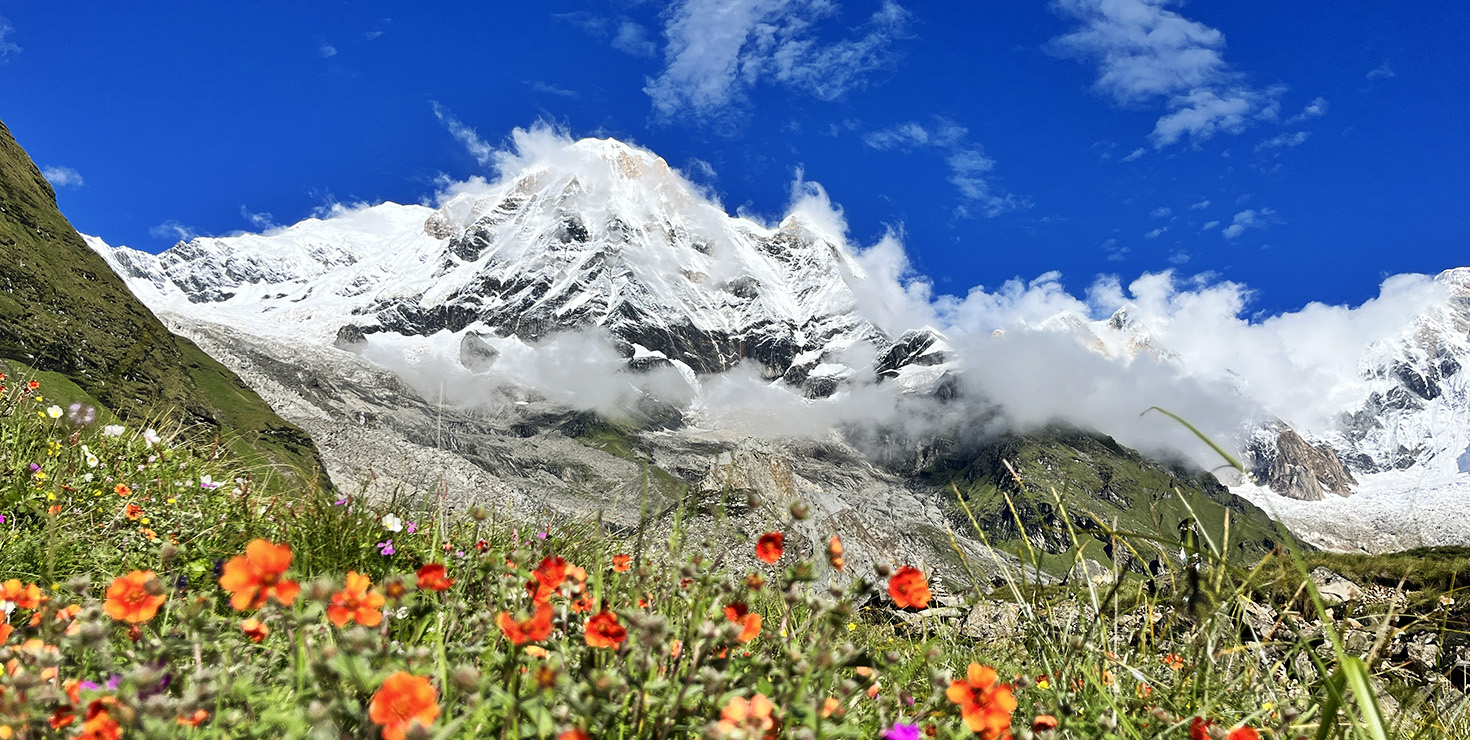
The destination is a natural bowl — the Annapurna Sanctuary — enclosed on all sides by peaks over 6,000 metres. Annapurna I (8,091m), the tenth highest mountain in the world and statistically one of the most dangerous to climb, forms the northern wall. Machhapuchhre, the sacred unclimbed fishtail peak, guards the entrance. Annapurna South, Hiunchuli, Gangapurna, and the Glacier Dome complete the circle. Standing at base camp with all of them surrounding you simultaneously is the kind of experience that most trekkers describe, afterward, with the same phrase: nothing prepared me for the scale.
The trail passes through traditional Gurung and Magar villages where stone paved lanes and carved wooden window frames have not changed meaningfully in centuries. It crosses the Modi Khola river on suspension bridges that sway in the mountain wind. It climbs through forest corridors that smell of pine resin and wet earth in the morning and rhododendron in spring. It arrives at natural hot springs at Jhinu Danda where the water is warm and the mountains above the treeline are still visible in the fading afternoon light.
This is not a technical climb. It is a walk into one of the most remarkable landscapes in the Himalayan world, done in eleven days at a pace that allows the place to actually reach you.
Annapurna Base Camp Trek Cost
What Does the ABC Trek Cost in 2026
The Annapurna Base Camp trek costs between US$875 and US$1,500 per person depending on group size, service level, and the inclusions in your chosen package.
Budget breakdown for a standard guided package:
Trekking permit and ACAP entry fee: US$30
TIMS card: US$20
Guide fees (11 days): included in package
Porter fees: included in package
Tea house accommodation per night: US$5 to US$15
Meals per day on trail: US$15 to US$25
Kathmandu hotel (2 nights): US$30 to US$80 per night
Pokhara hotel (2 nights): US$25 to US$70 per night
Kathmandu to Pokhara bus or flight: US$15 to US$120
What the Package Price Includes
A fully organized package from Getaway Nepal Adventure at US$875 per person includes all ground transfers, tea house accommodation throughout the trek, three daily meals on trail, an experienced English speaking trekking guide, a porter (shared between two trekkers), all permits, a trekking certificate, sleeping bag and duffle bag, and welcome and farewell dinners in Kathmandu.
What Costs Extra
International flights, Nepal visa fee (US$50 for 30 days), personal travel insurance, alcoholic beverages, hot showers and charging fees at tea houses, personal tips for guides and porters, and any activities outside the stated itinerary.
Day by Day Itinerary
Day 1 — Arrival in Kathmandu (1,400m)
Land at Tribhuvan International Airport and transfer to your hotel in Thamel. Pre trek briefing with your guide in the evening — permits, gear check, trail overview, and what the next eleven days will actually look like. Welcome dinner. Early night.
Day 2 — Drive or Fly to Pokhara (820m)
Seven hour bus journey or 25 minute flight to Pokhara, the starting city for the Annapurna region. Afternoon at leisure on the lakeside. The mountains you will spend the next eight days walking toward are already visible above the northern treeline.
Day 3 — Drive to Nayapul, Trek to Ghandruk (1,940m) | 4 to 5 hours
The trek begins properly at Nayapul. The trail climbs through terraced farmland and traditional Gurung villages, the air warm and green and smelling of cultivation and wood fires from the farmhouses above the path. Ghandruk is one of Nepal’s most beautiful Gurung settlements — stone paved lanes, carved wooden windows, and a ridge that looks directly at Annapurna South and Machhapuchhre across the valley. The first evening above the road.
Day 4 — Ghandruk to Sinuwa (2,310m) | 5 to 6 hours
Descend to the Kimrong Khola, cross the river, and climb steeply to Chhomrong — the last permanent village before the Sanctuary entrance, perched on a terraced ridge with views that have stopped more than a few trekkers mid step. Continue down to the river again and up to Sinuwa as the forest thickens around the trail. The valley is narrowing. The mountains ahead are growing.
Day 5 — Sinuwa to Dovan or Himalaya Hotel (2,920m) | 5 to 6 hours
Enter the dense bamboo and rhododendron forest that lines the inner valley. The light changes here — filtered and green, the canopy closing overhead, the sound of the Modi Khola audible below in the gorge. Pass through Bamboo and Doban and Himalaya Hotel, the teahouses getting smaller and the forest getting bigger with every hour of walking.
Day 6 — Trek to Machhapuchhre Base Camp (3,700m) | 4 to 5 hours
The forest ends. The trees give way to open alpine terrain and suddenly the scale of everything changes. The valley widens into a glacial corridor and Machhapuchhre — the fishtail peak that has never been climbed and never will be, protected by government decree and local belief — appears directly ahead, close enough to feel presumptuous. Overnight at MBC with the wind off the glacier arriving after sunset.
Day 7 — Trek to Annapurna Base Camp and Return to MBC (4,130m) | 5 hours
The summit day. Early start recommended — the sky above 4,000 metres is at its clearest in the first two hours after dawn and the amphitheatre of peaks catches the light in a sequence that begins with Annapurna South and moves slowly around the entire circle. The base camp itself is a flat area of glacial moraine at the foot of the Annapurna massif, surrounded on all sides by peaks that were unclimbed for most of human history. Stand here for as long as the air allows. Return to MBC for overnight.
Day 8 — MBC to Bamboo (2,310m) | 6 to 7 hours
The long descent begins. The body works differently going down — the lungs grateful, the knees less so. Pass back through Deurali, Himalaya Hotel, and Doban, the forest closing back in around you as the altitude drops. The familiar smell of the bamboo corridor returns.
Day 9 — Bamboo to Jhinu Danda (1,760m) | 5 hours
Back through Chhomrong and down to Jhinu Danda, where natural hot springs sit at the river’s edge and the water is warm and the mountains above the treeline are still visible. Most trekkers spend longer here than planned. This is the correct response.
Day 10 — Jhinu Danda to Nayapul, Drive to Pokhara (820m) | 3 hours
Final morning on the trail — a short descent to Nayapul through Syauli Bazaar and a drive back to Pokhara. Lakeside dinner. Hot shower. The trek is over and the conversation about when to come back has already started.
Day 11 — Return to Kathmandu and Departure
Flight or bus back to Kathmandu. Farewell dinner. Transfer to international airport for departure.
Best Time to Visit
Autumn — September to November
The best overall season. Skies are clear after the monsoon, temperatures are comfortable from valley to base camp, and the visibility at ABC produces the full photographic impact of the amphitheatre. October is the peak of the peak — expect the trail to be busy at tea houses but never genuinely crowded.
Spring — March to May
The second best season and arguably more beautiful. Rhododendrons turn the lower hillsides red and white from March onward, the temperatures are slightly warmer than autumn, and the trail carries a freshness that the post monsoon season does not quite replicate. April is exceptional for both flowers and visibility.
Winter — December to February
Cold and quiet. Snow above 3,000 metres is common and the upper sections of the trail require proper cold weather gear. The reward is empty tea houses, negotiable rates, and an intimacy with the landscape that peak season cannot offer. Experienced trekkers who do not mind the cold often prefer it.
Monsoon — June to August
Not recommended. Heavy rainfall, slippery trails, leeches in the lower forest, and persistent cloud cover at altitude combine to make this the one season the trail is better avoided.
Difficulty Level
The Annapurna Base Camp trek is rated moderate to moderately difficult.
The daily walking hours range from four to seven across the itinerary. The maximum altitude of 4,130 metres is high enough to produce mild altitude effects in some trekkers — headache, slower pace, reduced appetite — but low enough that serious altitude sickness is uncommon with a properly paced itinerary. The steepest sections are the stone staircase climbs between river crossings and the ridge villages, particularly around Chhomrong and Sinuwa. No technical climbing or equipment is required at any point.
A reasonable baseline fitness level and a pair of broken-in trekking boots will carry most people through this trek comfortably. Previous trekking experience helps but is not a requirement.
Permits Required
Annapurna Conservation Area Permit (ACAP): NPR 3,000 (approximately US$22) per person. Available at the Nepal Tourism Board office in Kathmandu or Pokhara.
TIMS Card (Trekkers Information Management System): NPR 2,000 (approximately US$15) per person for individual trekkers. Available at the same offices.
Both permits must be carried throughout the trek and are checked at multiple checkpoints on the trail.
Accommodation on the Trail
Tea houses on the Annapurna Base Camp trail range from basic to genuinely comfortable depending on altitude and season. Below Chhomrong the rooms are clean and reasonably well appointed with attached or shared bathrooms. Above Chhomrong the accommodation becomes simpler — twin share rooms, common bathrooms, thick blankets provided. At MBC and ABC the rooms are basic and warm enough for the altitude.
Booking ahead is recommended in October and November. The rest of the year the trail is relaxed enough to arrive and find a room without difficulty.
Food and Nutrition on the Trail
Tea house menus on the ABC trail are surprisingly broad. Dal bhat — the national dish of lentil soup, rice, vegetables, and pickles — is available everywhere, nutritionally complete, and refillable without extra charge, which matters considerably on Day 6. Pasta, noodle soup, fried rice, eggs in multiple preparations, pancakes, porridge, and fresh bread appear on most menus below 3,500 metres. Above that the options simplify but the portions do not. Carry personal snacks for the higher days.
Frequently Asked Questions
What is the cost of the Annapurna Base Camp Trek?
The Annapurna Base Camp trek costs between US$875 and US$1,500 per person for a fully guided package including permits, accommodation, meals on trail, guide, and porter. Budget trekkers organising independently can expect to spend US$400 to US$600 excluding flights and Kathmandu costs.
How difficult is the Annapurna Base Camp trek?
The trek is rated moderate to moderately difficult. Daily walks of four to seven hours on well marked trails with no technical climbing required. Reasonable fitness and broken-in boots are sufficient preparation for most trekkers.
Do I need a guide for the Annapurna Base Camp trek?
A guide is not legally mandatory but is strongly recommended. A knowledgeable guide improves safety, navigation, cultural understanding, and the overall quality of the experience significantly. Solo trekking without a guide on remote high altitude sections carries real risk.
How long does the Annapurna Base Camp trek take?
The standard itinerary runs 11 days from Kathmandu to Kathmandu. A shorter 9 day version is possible but reduces acclimatisation time and removes some of the most rewarding trail sections.
What permits do I need for the ABC trek?
Two permits are required: the Annapurna Conservation Area Permit (ACAP) and the TIMS card. Both are available at Nepal Tourism Board offices in Kathmandu and Pokhara at a combined cost of approximately US$37.
Is altitude sickness a risk on the ABC trek?
Mild altitude effects are possible above 3,500 metres. Serious altitude sickness is uncommon at 4,130 metres with a properly paced itinerary. Descending immediately resolves most altitude related symptoms. Your guide will monitor acclimatisation throughout.
What is the best season for the Annapurna Base Camp trek?
Autumn (October and November) and spring (March and April) offer the best conditions — clear skies, stable weather, and comfortable temperatures from valley floor to base camp.
Conclusion
The Annapurna Base Camp trek delivers something that most trekking destinations in the world cannot: a genuinely accessible journey into a landscape that does not scale itself down for visitors. The mountains at ABC are the real mountains, at their actual size, closer than any viewpoint photograph has ever honestly communicated. The villages on the approach trail are real villages where people live and farm and raise children rather than heritage reconstructions staged for passing trekkers. The hot springs at Jhinu are genuinely warm and the dal bhat at the tea houses is genuinely good and the guide who walks beside you for eleven days genuinely knows what he is looking at every time he looks up.
Eleven days. One of the great mountain experiences on earth. Starting from US$875 per person.
Contact Getaway Nepal Adventure to begin planning your Annapurna Base Camp trek today.
Recent Posts