Nepal’s Most Rewarding Mardi Himal Short Trek
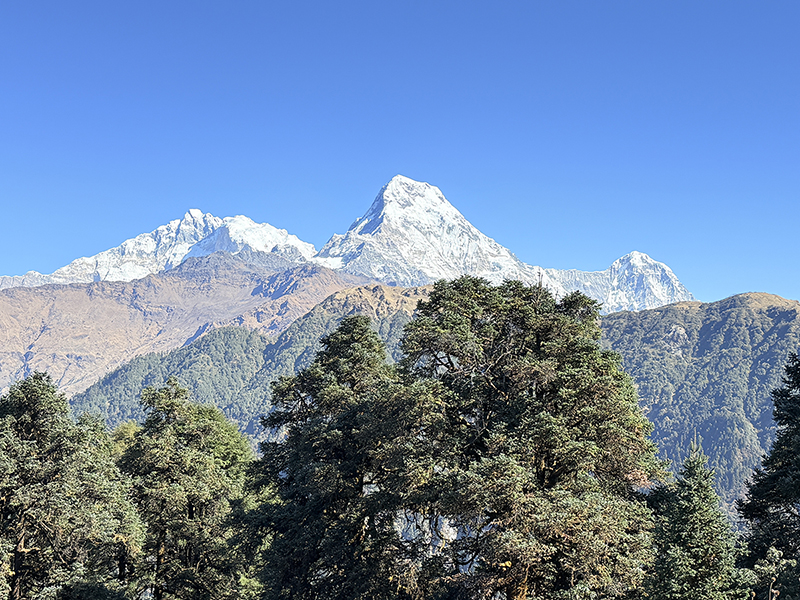
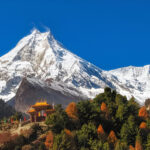
Mardi Himal itself is a 5,587-meter peak sitting directly east of Machapuchare, separated from Nepal’s most recognizable mountain silhouette by a 5,200-meter col. The trek to its base camp at 4,500 meters follows the ridge that descends south from the peak’s lower flanks — a trail that was only opened to trekkers in 2012, which goes a long way toward explaining why it still carries a fraction of the foot traffic that the Annapurna Circuit and ABC routes handle every season. The route climbs from subtropical forest through dense rhododendron stands and open alpine meadows to ridgeline terrain where the mountain panorama — Mardi Himal, Machapuchare, Annapurna South, Hiunchuli, Annapurna I, Dhaulagiri, Manaslu — sits overhead with a closeness that the ABC route, for all its popularity, doesn’t quite replicate.
This is the definitive guide to planning, preparing for, and making the most of the Mardi Himal Trek in Nepal.
What Is the Mardi Himal Trek?
The Mardi Himal Trek is a moderate-grade Himalayan trail in Nepal’s Annapurna Conservation Area, beginning at Kande or Phedi — a 90-minute drive from Pokhara Lakeside — and terminating at Mardi Himal Base Camp at 4,500 meters. The standard route runs between 5 and 8 days depending on the itinerary, starting point, and whether trekkers extend to the full base camp or turn around at the Upper Viewpoint (approximately 4,200 meters). Total trekking distance across the full route runs between 41 and 45 kilometers.
Unlike the Annapurna Circuit or Everest Base Camp trek — long, logistically complex routes requiring weeks of time and significant pre-planning — the Mardi Himal Trek is compact, accessible from Pokhara without internal flights or long jeep rides, and achievable by trekkers of moderate fitness without prior Himalayan experience. It sits in a sweet spot that very few Nepal treks occupy: high enough for genuine alpine terrain and close-range mountain views, short enough for travelers working within a 10-day Nepal window, and quiet enough that solitude on trail is still the norm rather than the exception.
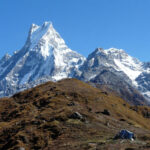
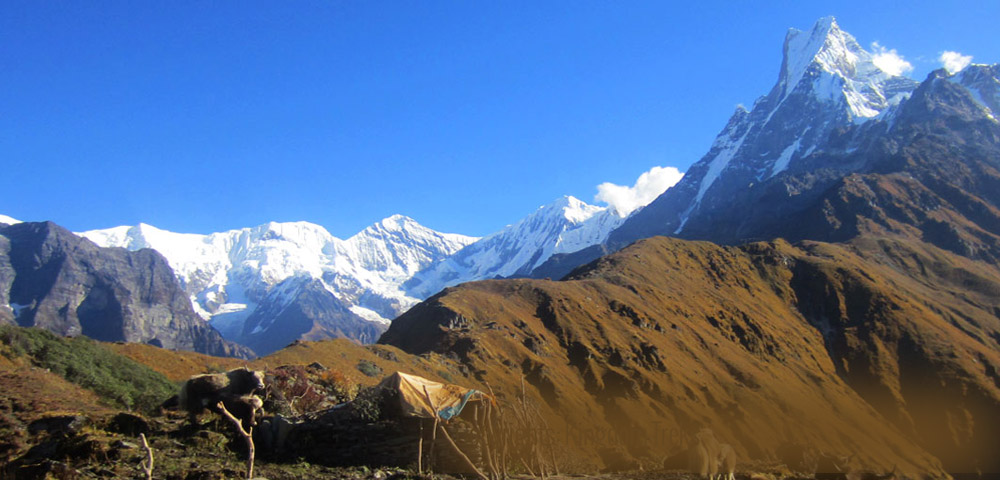
The trek was Mardi Himal’s other distinction from the major routes is the mountain it puts closest to your eye line. Machapuchare — 6,993 meters, legally off-limits to climbers since 1964 at the request of the local community who consider it the home of Lord Shiva — looms over the trail from the middle sections onward with an immediacy that most Annapurna-area treks don’t provide. From High Camp and the Upper Viewpoint, it fills the sky in a way that photographs cannot accurately represent.
Trek Highlights
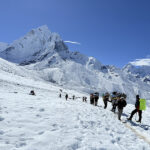
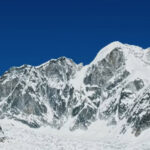
Close-Range Views of Machapuchare and the Annapurna Range The defining visual experience of the Mardi Himal Trek is the sustained proximity of Machapuchare throughout the upper sections of the route. From High Camp at 3,580 meters upward, the mountain’s distinctive twin-peaked summit is never out of view. On the final push to the Upper Viewpoint or Base Camp, you’re looking at Machapuchare, Mardi Himal (5,587 meters), Annapurna South (7,219 meters), Hiunchuli (6,441 meters), Annapurna I (8,091 meters), Baraha Shikhar (7,647 meters), Tent Peak (5,695 meters), and Singha Chuli (6,501 meters) — an unbroken semicircle of Himalayan giants at ranges that make altitude and scale feel immediate rather than abstract.
The Forest Trail Experience The lower sections of the Mardi Himal Trek move through some of the Annapurna region’s densest and most biodiverse forest — oak, rhododendron, and pine at lower elevations transitioning to pure rhododendron stands between 2,500 and 3,200 meters. In spring (March to May), this section turns into one of Nepal’s most spectacular botanical displays: red, pink, and white rhododendron blooms covering the hillside in overlapping color bands that persist for weeks. The forest is also home to Himalayan tahr, barking deer, spotted deer, and an extraordinary diversity of bird life — researchers surveying the Mardi Himal corridor recorded 152 species in a single study, including the Danphe pheasant (Nepal’s national bird) and multiple species of laughingthrush.
The Ridge Walk to High Camp Between Low Camp (3,150 meters) and High Camp (3,580 meters), the trail leaves the forest behind and begins traversing the open Mardi Himal ridge. This section is where the trek transforms from a forest walk into an alpine ridge experience — the valley drops sharply on both sides, the tree line recedes below, and the mountain views that have been appearing in glimpses through the canopy now dominate the horizon without interruption. The ridge walk is exposed and requires careful footing in sections, but it’s non-technical and carries no objective danger in normal dry-season conditions.
Gurung and Magar Village Culture The lower and mid-sections of the route pass through Gurung and Magar communities — Dhampus, Pothana, Siding — with a way of life tied closely to high-altitude farming and, increasingly, trekking support services. The Gurung people in particular have a deep connection to this landscape; many families here have been farming the same terraced hillsides for generations, and the teahouses along the route are overwhelmingly family-run operations rather than commercially managed lodges. Staying in these teahouses and eating meals prepared by families who have been cooking at altitude their whole lives is a cultural dimension of the Mardi Himal Trek that larger routes simply cannot replicate at the same scale.
Relative Solitude Even at peak season, the Mardi Himal Trail carries a fraction of the trekker volume that the ABC and Circuit routes handle. On the ridge sections above Forest Camp, multi-hour stretches without encountering another trekking group are common outside of October weekends. This is partly the route’s relative newness, partly its shorter duration making it less visible to the international trekking market, and partly the fact that most Pokhara-based trekkers default to routes they’ve already heard of. For the foreseeable future, Mardi Himal retains the quality that the popular routes have largely lost — the sense that the mountain is yours for the walking.
Trek Route and Detailed Itinerary
The most commonly trekked version runs 7 to 8 days including travel between Kathmandu and Pokhara. Below is a comprehensive day-by-day breakdown of the standard itinerary:
Day 1 — Kathmandu to Pokhara
The journey begins with travel from Kathmandu to Pokhara — either by air (25-minute domestic flight, approximately $100–$120 one way) or by road (7–8 hours by tourist bus or 6 hours by private vehicle along the Prithivi Highway). The road option follows the Trishuli River west through Malekhu gorge before turning south at Muglin and climbing into the Pokhara Valley — a scenic drive worth doing at least one direction. Arrive in Pokhara, check into Lakeside accommodation, and prepare gear for the following day. Overnight in Pokhara (820 meters).
Day 2 — Drive to Kande, Trek to Deurali (Pitam Deurali)
A 90-minute drive north from Pokhara Lakeside reaches Kande — the standard trailhead for the Mardi Himal route — at approximately 1,800 meters. The trail climbs immediately from Kande, ascending through terraced farmland and initial forest to the Gurung hill village of Dhampus (1,650 meters) — one of the best-positioned villages in the Annapurna foothills for morning mountain views, including Lamjung Himal and Manaslu visible to the north and east. From Dhampus, the trail continues ascending through rhododendron and pine forest to Pothana (1,890 meters), where ACAP and TIMS permits are checked, and then pushes on to Deurali (Pitam Deurali) at 2,125 meters — the pass that marks the junction between the Annapurna South and Mardi Himal/Machapuchare ridges. Walking time: 4 to 5 hours. Overnight in Deurali.
Day 3 — Deurali to Forest Camp
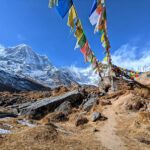
The day’s trail continues north and upward along the ridge, entering progressively denser rhododendron forest that defines this section of the trek more than any other. The canopy closes overhead, prayer flags appear on branches, and occasional clearings open views toward the Annapurna massif ahead. Wildlife is most commonly encountered on this section — Himalayan tahr on the rocky outcrops above the treeline, barking deer in the undergrowth below. Forest Camp sits at 2,540 meters in a clearing within the forest, its teahouses clustered on a flat saddle with partial mountain views opening to the north and west. Walking time: 4 to 5 hours. Overnight at Forest Camp.
Day 4 — Forest Camp to Low Camp to High Camp
This is the most altitude-intensive day of the trek and the one that most clearly separates the lower forest experience from the alpine ridge terrain above. From Forest Camp, the trail climbs steadily to Low Camp (3,150 meters) — a more exposed position where the Annapurna South face becomes clearly visible and Machapuchare begins to dominate the northern skyline. Some itineraries split this day into two (overnight at Low Camp), which is recommended for trekkers who are sensitive to altitude or prefer a more conservative acclimatization schedule. Those continuing to High Camp push another 430 meters of elevation gain along the increasingly open ridge to reach High Camp at 3,580 meters — the highest overnight point on the standard route and the launch position for the following morning’s summit push. Walking time: 5 to 7 hours total (Forest Camp to High Camp). Overnight at High Camp.
Day 5 — High Camp to Upper Viewpoint / Mardi Himal Base Camp and Return
The summit day begins before dawn. Most guides wake trekkers between 3:30 and 4:00 AM for a pre-sunrise departure — the objective is to reach the Upper Viewpoint or Base Camp as the first light hits the mountain faces, and to complete the ascent before cloud cover builds across the peaks, which typically happens by mid-morning. From High Camp, the trail continues north along the ridge, becoming steeper and narrower as it approaches the Upper Viewpoint at approximately 4,200 meters. From here, the view is complete — Machapuchare directly ahead and above, Mardi Himal’s summit pyramid to the right, the full Annapurna wall spanning the horizon, and on clear mornings, Dhaulagiri visible to the far west.
Trekkers with the fitness and time to push further continue from the Upper Viewpoint to Mardi Himal Base Camp at 4,500 meters — a steeper, looser section involving scree and, in winter and early spring, snow and ice that may require microspikes. The base camp position sits directly below the Mardi Himal-Machapuchare col and delivers the most intimate Himalayan viewpoint of the entire trek. The total distance from High Camp to Base Camp and back to High Camp runs approximately 11.8 kilometers and takes 7 to 9 hours. A packed breakfast from the teahouse kitchen is essential — the kitchen won’t be operational at 4 AM departure.
Return to High Camp for lunch, then descend to Badal Danda (3,210 meters) for the overnight. Overnight at Badal Danda.
Day 6 — Badal Danda to Siding Village
The descent from the ridge back to valley level follows the alternative southern trail through Forest Camp and Low Camp before dropping steeply to Siding Village (1,855 meters) — a traditional Gurung farming community at the bottom of the Mardi valley that represents the cultural counterpoint to the alpine environment of the preceding days. The descent is long (9 kilometers, approximately 6 hours) and involves sustained stone stairway sections that test the knees — trekking poles are strongly recommended. Siding itself is relaxed, green, and largely removed from the trekking circuit atmosphere. Overnight in Siding Village.
Day 7 — Siding to Lwang to Pokhara
A final gentle descent from Siding through Lwang village — a Gurung community known for its canyoning and waterfall access near the Seti River — reaches a road point from which a 2 to 3-hour drive returns to Pokhara Lakeside. This day can be combined with activity at Lwang (the canyoning site is directly on the descent route) for those with energy and interest.
Day 8 — Pokhara to Kathmandu Return to Kathmandu by air or road to complete the full itinerary.
Required Permits
Two permits are required for the Mardi Himal Trek, both of which can be obtained in Kathmandu (at the Nepal Tourism Board office in Pradarshani Marg) or in Pokhara before the trek begins:
Annapurna Conservation Area Permit (ACAP): Issued by the National Trust for Nature Conservation, the ACAP covers all trekking within the Annapurna Conservation Area. Cost: NPR 3,000 (approximately USD 23) per person. This permit is checked at the checkpoint in Pothana on Day 2 and at various points along the upper route.
TIMS Card (Trekkers’ Information Management System): The TIMS card is a mandatory registration document for all foreign trekkers in Nepal. Cost: NPR 2,000 for individual trekkers; NPR 1,000 if trekking as part of a group through a registered agency.
Trek Difficulty
The Mardi Himal Trek is rated easy to moderate, the most appropriate entry point for trekkers who have reasonable physical fitness but limited or no previous high-altitude experience. It does not require technical climbing skills, rope work, crampons, or mountaineering equipment for the standard route up to the Upper Viewpoint. The extension to Mardi Himal Base Camp (4,500 meters) involves a steeper, looser trail with scree and seasonal snow that demands careful footing and adds meaningful physical challenge.
The specific difficulty factors to understand before committing:
Sustained Stone Stairways: The lower sections of the Mardi Himal trail — particularly the ascent from Kande and the descent to Siding — involve extended stone stairway climbing. This is harder on the knees and hips than natural trail surface, and is the primary source of discomfort for most trekkers on this route. Trekking poles and pre-trip quad and glute strengthening significantly reduce the impact.
Altitude at High Camp and Above: High Camp at 3,580 meters and Base Camp at 4,500 meters are high enough for altitude sickness to be a realistic concern, particularly for trekkers ascending quickly. The standard itinerary builds in a gradual ascent profile, but trekkers who feel headache, nausea, or significant loss of appetite above 3,000 meters should not push higher until symptoms resolve. Carry diamox as a precautionary measure and ensure your guide carries a pulse oximeter.
Weather Exposure on the Ridge: The Mardi Himal ridge above Low Camp is fully exposed to wind and weather. Afternoon cloud cover builds quickly in all seasons — the reason for the 4 AM base camp departure on summit day is specifically to catch the morning window before clouds obscure the mountain views. A lightweight wind shell and insulated layer are non-negotiable above 3,000 meters regardless of season.
The Base Camp Section: From the Upper Viewpoint to Mardi Himal Base Camp, the trail becomes steep, loose, and — in winter and early spring — covered in snow and ice. Microspikes or Yaktrax are strongly recommended for this section in any month between November and April. This stretch is where the “easy to moderate” rating upgrades to moderate-challenging, and where trekkers with less experience need to be most honest about their fitness and comfort on exposed terrain.
Best Season for the Mardi Himal Trek
Autumn — September to November (Recommended) Autumn is the prime trekking season for Mardi Himal and the wider Annapurna region. The monsoon clears by mid-September, leaving trails freshly washed, air exceptionally clear, and mountain visibility at its annual best. October is the peak month — stable weather, warm daytime temperatures at lower elevations, cold but manageable nights at High Camp, and the sharpest mountain views of the year. November extends the excellent conditions but brings progressively colder nights above 3,000 meters and the first possibility of snowfall at High Camp and above.
Spring — March to May (Excellent) Spring is the second prime season, and for the Mardi Himal Trek specifically, it carries a significant advantage over autumn: the rhododendron forest sections between Deurali and High Camp bloom through March and April in a display that makes the lower trail visually extraordinary. Weather stability builds through April into May, though pre-monsoon cloud development can shorten the clear morning windows at High Camp by late May. March mornings can be bitingly cold above 3,500 meters — budget for proper insulation.
Winter — December to February (Possible but Demanding) Winter trekking on Mardi Himal is possible and delivers the year’s most crystalline mountain visibility on clear days. The trade-off: temperatures at High Camp drop to -10°C or below at night, the Base Camp section will be snow and ice-covered requiring microspikes, and some teahouses on the upper route close entirely in January and February. Experienced cold-weather trekkers who pack appropriately will find the winter route less crowded and visually spectacular. First-time Himalayan trekkers should choose another season.
Monsoon — June to August (Not Recommended) Heavy rainfall from June through August makes the lower forest trails muddy and slippery, significantly increases leech activity in the forest sections, and blocks mountain views with persistent cloud for most of the day. The upper ridge sections above Low Camp receive less precipitation than the forest below — the area sits partially in the Annapurna rain shadow — but the trail access conditions through the lower forest make monsoon trekking on Mardi Himal an unnecessarily uncomfortable experience when better seasons exist.
Altitude Profile and Key Elevations
Location Altitude
Pokhara 820 m
Kande (Trailhead) 1,770 m
Dhampus 1,650 m
Pothana 1,890 m
Deurali (Pitam Deurali) 2,125 m
Forest Camp 2,540 m
Low Camp 3,150 m
High Camp 3,580 m
Upper Viewpoint 4,200 m
Mardi Himal Base Camp 4,500 m
Mardi Himal Summit 5,587 m
Siding Village (descent) 1,855 m
What to Pack
Packing for the Mardi Himal Trek requires planning for two distinct environments: subtropical forest at lower elevations and exposed alpine terrain above 3,500 meters. The temperature differential between Kande (warm, humid) and High Camp (cold, wind-exposed) can span 25 degrees Celsius, which means layering is not optional — it’s the fundamental clothing strategy.
Clothing Essentials: Moisture-wicking base layer (top and bottom), mid-layer fleece or light down jacket, insulated down jacket for High Camp and above, waterproof and windproof outer shell, trekking trousers, warm hat, sun hat for lower elevations, gloves (liner and insulated outer), wool or synthetic trekking socks (minimum three pairs), and a light balaclava for the pre-dawn base camp push.
Footwear: Well broken-in waterproof trekking boots with ankle support. Trail runners are viable for the lower sections but inadequate for the rocky scree above the Upper Viewpoint and any snow-covered terrain near base camp. Microspikes or Yaktrax for December through April.
Gear: 35 to 45-liter daypack for summit day (main bags left at High Camp teahouse), sleeping bag rated to -10°C (teahouse blankets above Forest Camp are thin), trekking poles (essential for the stone stairway descent to Siding), headlamp with fresh batteries, UV water purification pen or iodine tablets, high-SPF sunscreen and lip balm (UV exposure above 3,500 meters is severe), personal first aid kit including altitude sickness medication (diamox).
Documents: Both permits (ACAP and TIMS), passport with multiple copies, travel insurance documentation confirming helicopter evacuation coverage above 4,000 meters.
Accommodation and Food on Trail
The Mardi Himal Trek is a teahouse trek — accommodation is available at all major stops along the route in family-run guesthouses that provide a room (typically wooden beds with foam mattresses and blankets, shared bathrooms), meals, and hot beverages. The quality and comfort of teahouses varies considerably by altitude: Pothana and Deurali have relatively comfortable, well-established lodges, while High Camp’s teahouses are basic but functional — the priority is shelter and a hot meal, not comfort.
Food along the route follows a consistent menu: dal bhat (the non-negotiable Himalayan staple — unlimited refills, infinitely reliable), noodle soup, fried rice, egg dishes, pancakes, porridge, and various soups. Prices increase with altitude as all supplies must be carried up by porters — a dal bhat that costs NPR 400 in Pothana may cost NPR 700 at High Camp, which is entirely reasonable given the logistics. Apple tea, butter tea, and hot chocolate are universally available and genuinely welcome on cold ridge mornings.
WiFi is available at most teahouses along the route — Deurali, Forest Camp, Low Camp, and High Camp all have some connectivity, though reliability decreases with elevation and is best treated as a bonus rather than a given. Phone signal (NTC and Ncell) exists at lower elevations and on exposed ridge sections but drops out in the forest interior.
Mardi Himal Trek Cost
The total cost of the Mardi Himal Trek varies based on how the trip is arranged, group size, and the level of service involved. Here’s a realistic breakdown:
Permits: ACAP (NPR 3,000) + TIMS (NPR 2,000) = approximately NPR 5,000 (USD 38) per person.
Guide: Licensed trekking guides charge approximately USD 30–40 per day. For a 5 to 6-day trek, budget USD 150–240 for guide fees.
Porter: Optional but worth considering — a porter carrying 15–20 kg of your gear costs approximately USD 20–25 per day. This investment in someone else’s livelihood also directly improves your own trekking experience.
Accommodation: Teahouse room rates range from NPR 300 to 800 per night, with many teahouses offering free rooms when you commit to eating all meals at their kitchen — the standard arrangement on this route.
Meals: Budget NPR 3000–4000 per day for three meals depending on altitude.
Transport: Pokhara to Kande taxi/jeep (NPR 1,500–2,500 shared, NPR 3,000–4,000 private). Return from Siding village to Pokhara approximately NPR 3,000–4,500 by jeep.
Total estimated cost per person (excluding Kathmandu-Pokhara travel): USD 350–600 for a 7-day itinerary including guide, permits, accommodation, meals, and transport. Agency packages including all of the above start from approximately USD 600–900 per person for a full-service guided trek with everything arranged.
Combining Mardi Himal with Other Routes
Mardi Himal + Ghorepani Poon Hill The most natural pairing in the Annapurna region — ascend via the Mardi Himal ridge route and descend via the Ghorepani trail to Ghandruk, connecting two of Pokhara’s best short treks into a single 10 to 12-day circuit. The connection from Siding village to Ghandruk and onward to Ghorepani adds 2 to 3 days.
Mardi Himal + Annapurna Base Camp From Ghandruk (reachable via the Siding descent), the ABC trail heads north to the Modi Khola and the sanctuary beyond. Adding ABC to the end of Mardi Himal extends the total trip to 12 to 14 days and gives trekkers both the ridge-above experience (Mardi) and the enclosed glacier sanctuary experience (ABC) in one trip.
Mardi Himal + Pokhara Adventure Activities Given the trek’s proximity to Pokhara and its relatively short duration, it combines perfectly with city-based adventure activities — paragliding from Sarangkot, white-water rafting on the Seti River, or canyoning at Lwang village (directly on the descent route from Siding) — for a Nepal trip that balances mountain trekking with Pokhara’s broader adventure offering.
Why Book Your Mardi Himal Trek with Getaway Nepal Adventure
The Mardi Himal Trek is technically straightforward, but the details that determine whether your experience is excellent or merely adequate — guide quality, permit timing, teahouse pre-booking in peak season, weather contingency planning, and on-the-ground support if conditions change — are exactly where a professional agency makes the difference.
Getaway Nepal Adventure is a Kathmandu and Pokhara-based trekking operator registered with the Nepal Tourism Board, TAAN, and the Nepal Mountaineering Association, with direct operational experience across the full range of Annapurna region treks including the Mardi Himal route. The company assigns certified, regionally experienced guides, handles all permit processing, manages teahouse bookings along the route to guarantee accommodation in peak season, and provides 24/7 support throughout the trek. Itineraries are built around each client — pace, fitness level, specific objectives (Upper Viewpoint vs. full Base Camp), and any combination routes — rather than sold as fixed packages.
If you’re planning the Mardi Himal Trek and want it done right from the first permit to the last jeep ride back to Pokhara Lakeside, contact Getaway Nepal Adventure to start the planning conversation.
Quick Reference: Mardi Himal Trek at a Glance
Trek Duration: 5 to 8 days (from and back to Pokhara)
Maximum Altitude: 4,500 meters (Mardi Himal Base Camp)
Difficulty: Easy to Moderate
Best Seasons: Autumn (September–November) and Spring (March–May)
Trek Distance: 41–45 kilometers total
Starting Point: Kande or Phedi (90 minutes from Pokhara)
Permits Required: ACAP (NPR 3,000) + TIMS (NPR 2,000)
Guide: Mandatory (March 2023 regulation) Accommodation: Teahouses throughout
Total Cost: USD 600–900 (agency-guided full package)
Nearest City: Pokhara (no internal flights required)
Wildlife: Himalayan Tahr, barking deer, Danphe pheasant, 152+ bird species
Mountains Visible: Machapuchare, Mardi Himal, Annapurna South, Hiunchuli, Annapurna I, Dhaulagiri, Manaslu
Recent Posts