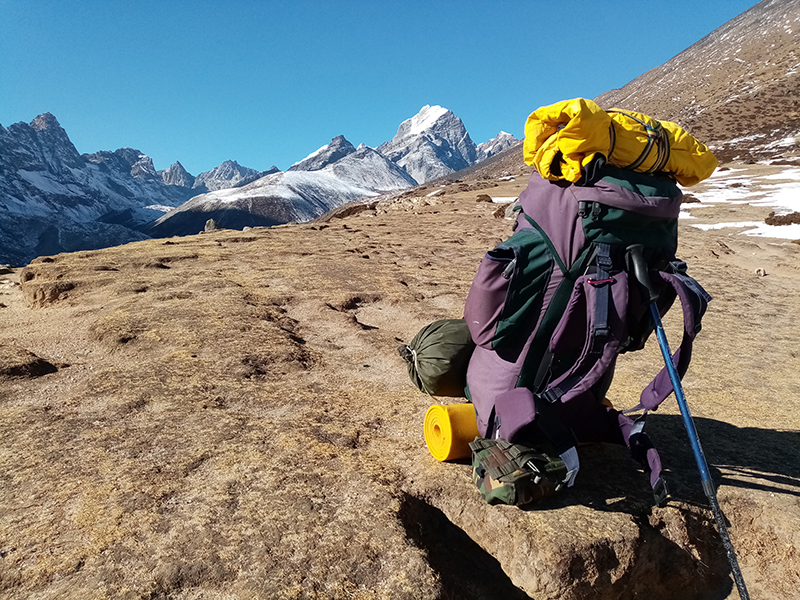
Best Trekking Agency in Nepal for Small Group Trekking
There’s a particular kind of frustration that only happens on a badly managed group trek. You’re standing at 4,200 meters with the entire Khumbu range spread out in front of you and you’re waiting — for the person at the back, for the guide who’s trying to herd sixteen people across a suspension bridge, for the schedule to catch up with the mountains. The view is extraordinary. The experience is not.
Small group trekking in Nepal solves that. A group of eight to twelve people, a guide who actually knows your names by day two, a pace set by the conditions of the trail rather than the lowest common denominator of a large tour. The difference isn’t marginal. It changes what the trek actually feels like from the first morning out of Lukla to the last descent.
This guide explains what makes a trekking agency genuinely good for small group departures in Nepal, what to look for before you book, and why Getaway Nepal Adventure has built its reputation as the go-to agency for small group trekking done right.
What Is Small Group Trekking in Nepal?
Small group trekking is exactly what it sounds like — organized trekking with a capped group size, typically between six and twelve people, led by a certified local guide with a support crew of porters and assistant guides scaled to the group.
It sits between fully private trekking (just you, a guide, and whoever you came with) and large group departures (the 20-person bus-to-basecamp operations that treat the Himalayas like a managed tour route). Small group trekking keeps the social energy and cost efficiency of group travel while retaining enough flexibility to feel personal.
In Nepal specifically, small group trekking means fixed departure dates — you sign up, show up in Kathmandu on the agreed day, and meet your group before the trail starts. The itinerary is set, but a good small group trekking agency builds enough flex into the daily structure to respond to conditions: weather, acclimatization, a trail section that warrants slowing down.
The best small group treks in Nepal feel less like organized tours and more like going into the mountains with a group of people who all made the same good decision.
Why Small Group Trekking Beats Going Alone or in a Crowd
Solo trekking in Nepal is legal and possible on most routes, but it misses something fundamental. The trails through the Khumbu, through the Annapurna Conservation Area, through the rhododendron forests of Langtang — they’re routes designed by centuries of human movement, and they make more sense with other people on them. The shared exhaustion of a hard uphill section. The collective silence at a viewpoint that delivers. The conversation over a teahouse dinner when the day’s walking is done and the stove is warm and you’re somewhere genuinely remote.
Soloing also means carrying the full logistics burden yourself: permits, teahouse bookings during peak season, altitude management decisions, route navigation in low visibility, and the absence of anyone nearby if something goes medically wrong above 4,000 meters.
Large group trekking solves the logistics but creates its own problems. A group of twenty people moves at the pace of its slowest member and needs so much coordination at each teahouse and each trail junction that the guide spends most of the day managing flow rather than enriching the experience. Anyone who has trekked behind a flag-waving group leader on the Everest Base Camp route in October knows exactly what this looks like.
Small group trekking — four to twelve people, a guide who has bandwidth for each of them — hits the balance point. Cost-efficient because shared. Flexible because small. Personal because the numbers are right.
What Makes a Trekking Agency Right for Small Groups?
Most trekking agencies in Nepal claim to offer small group departures. The definition varies widely. Some operators call eighteen people a small group. Some cap genuinely at eight. The difference isn’t cosmetic — it determines what the guide can actually manage, how quickly the group moves through narrow trail sections, and how much individual attention each trekker gets when altitude or injury becomes a conversation.
Beyond group size, the things that separate a good small group trekking agency from an average one:
Guide quality and continuity. A certified Nepal Tourism Board trekking guide with genuine route knowledge and Wilderness First Responder training is a different proposition from a generalist guide doing whichever trek is booked that week. Small groups deserve guides who know the specific route the way a commuter knows their morning walk — every teahouse, every exposed section, every location where an altitude problem is most likely to surface.
Permit expertise. Nepal’s trekking permit requirements changed in 2023 when the government mandated licensed guides for Everest and Annapurna regions.
Restricted area permits for Mustang, Manaslu, and Dolpo require specific documentation and processing timelines that catch underprepared operators every season. A small group agency that gets permits right the first time, every time, is protecting you from delays that eat days off the front of your trek.
Group size enforcement. Ask directly: what is your maximum group size for this departure? Then ask what happens if it fills beyond that. An agency that will squeeze two more bookings into a “full” small group for the revenue is not operating to the standard the concept requires.
What happens when it goes wrong. Weather closes the pass. Someone develops AMS symptoms at Dingboche. A porter is injured on the descent. How a trekking agency handles these situations is the most accurate measure of its operational quality. It requires established helicopter evacuation protocols, a 24-hour contact line in Kathmandu, and guides trained to make the right call without waiting for instructions.
Honest acclimatization scheduling. Some operators shorten itineraries to make them more marketable. A 12-day Everest Base Camp trek sounds better than a 14-day one on paper. In reality, cutting rest days at Namche Bazaar or Dingboche is how altitude sickness becomes a serious problem rather than a manageable one. A good agency builds its schedules around what the altitude requires, not what the marketing prefers.
Getaway Nepal Adventure: The Agency Built for Small Groups
Getaway Nepal Adventure is a Kathmandu-based trekking agency and Destination Management Company (DMC) that has been running small group and private trekking programs in Nepal for over two decades. They’re independently owned, government registered, and authorized by the Nepal Tourism Board — the foundational credentials that every legitimate Nepal trekking operator should hold.
What distinguishes them in the small group trekking space is the philosophy underneath the logistics. They specialize in personalized tailor-made, fixed and private departure trekking holidays for individual and group travelers — which in practice means they don’t operate small groups as a volume business. Their groups are small because they believe the trek is better that way, not because it’s a marketing position.
With their in-depth knowledge of the region, they aim to deliver a genuinely interesting, high-quality, efficient personal service and Nepal experience at a competitive price — and the phrase “genuinely interesting” is doing real work there. Their guides are not reciting a fixed script. They’re people who grew up in, or have spent careers walking through, the regions they guide. The difference in quality of experience is substantial.
Their small group trekking operation covers the full range of Nepal’s major trekking regions — Everest, Annapurna, Langtang, Manaslu, Poon Hill — with both fixed departures and custom group programs for friends, families, and colleagues traveling together.
No Upselling. No Pressure.
Call them or write them and you will receive a quick response from someone who knows the destinations and hotels, who understands how to piece an itinerary together, and who knows how to get the best value for you — without any hard sell.
In an industry where commission-driven upselling is standard, this is not a small thing. A small group trekking agency that recommends the right trek for your fitness level and timeline rather than the most expensive available option is one that’s worth the business.
The Sustainable Tourism Commitment
They practice sustainable tourism by respecting their staff, the environment, the locals, and the gratitude they deserve. Their itineraries are equally ethical and responsible.
Porter welfare is an issue in the Nepal trekking industry that doesn’t get enough attention. Porters are the infrastructure that makes Himalayan trekking possible — carrying loads above 4,000 meters on trails that international trekkers struggle on with just a daypack. A trekking agency that treats its porter workforce with respect, pays fair wages, and applies load limits is operating to a different ethical standard than one that doesn’t. Getaway Nepal’s commitment to this is explicit and operational, not just a line in a brochure.
Small Group Treks Getaway Nepal Runs
Everest Base Camp Trek — Small Group Departure
The most iconic trek on earth, done properly. The route from Lukla to Base Camp through Namche Bazaar, Tengboche, Dingboche, and Lobuche covers 130 kilometers at altitudes ranging from 2,800 to 5,364 meters. Getaway Nepal’s EBC small group program is structured with the acclimatization days the route requires — rest day at Namche (3,440m), rest day at Dingboche (4,360m) — not trimmed to fit a more saleable itinerary.
Everest Base Camp Trek offer well-organized, small group journeys that ensure the highest safety, comfort, and an unforgettable experience.
The group reaches Base Camp (5,364m) with the Khumbu Icefall visible directly in front of them and the full southern face of Everest above. Whatever the trail took to get there — the suspension bridges, the altitude headaches at Lobuche, the 4 AM start for Kala Patthar — it is immediately, completely worth it.
Annapurna Base Camp Trek — Small Group
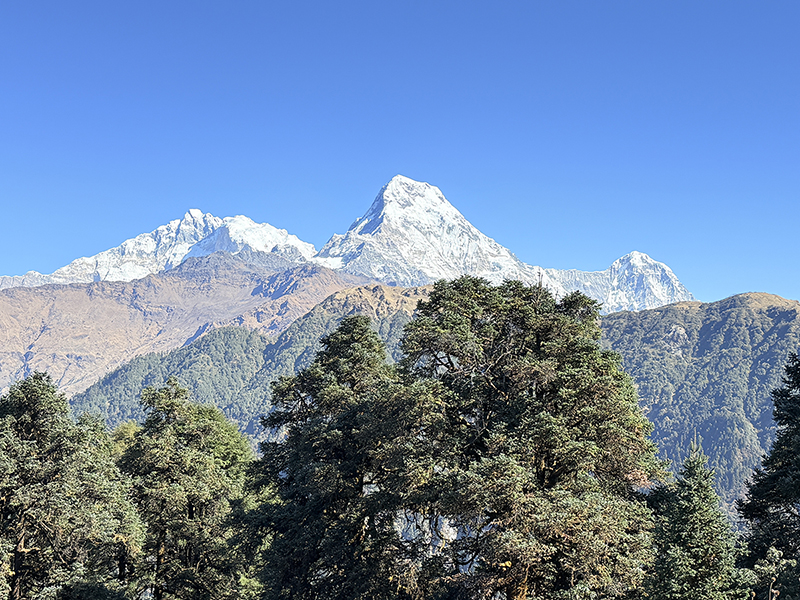
The Annapurna Sanctuary route ascends through the Modi Khola gorge into a glacial amphitheater surrounded by ten peaks over 7,000 meters — including Annapurna I (8,091m), the tenth highest mountain in the world. Maximum elevation: 4,130 meters at Base Camp. Duration: 10 to 12 days. Rhododendron forests in March and April. Panoramic morning light on the Annapurna South face that stops the entire group in its tracks on the first clear morning at Base Camp.
Annapurna Circuit — Small Group
One of the world’s great long walks. The classic circuit crosses Thorong La Pass at 5,416 meters — the highest point on the route and the physical and psychological crux of the entire trek. The full circuit takes 14 to 18 days through landscapes that shift from subtropical lowland forest through alpine meadow to the high desert of the Mustang rain shadow. The variety of terrain, culture, and altitude makes this the Annapurna route that rewards experienced trekkers who want more than a single destination.
Langtang Valley Trek — Small Group
The closest major trekking region to Kathmandu — no domestic flight required. The Langtang Valley was devastated by the 2015 earthquake and has been gradually rebuilding; trekking here now carries a particular meaning, spending money directly in communities that are still recovering. The trail ascends through rhododendron and bamboo forest into a high glacial valley with the Langtang Lirung (7,234m) at its head. A 7 to 10-day circuit accessible for first-time Himalayan trekkers.
Poon Hill Trek — Small Group
Four days. Maximum elevation 3,210 meters. The Poon Hill viewpoint at dawn — the Dhaulagiri and Annapurna ranges filling the horizon from left to right as the sky goes from black to deep blue to orange — is one of the most concentrated visual experiences in Nepal. This is the entry-level Himalayan trek for travelers who want genuine mountain altitude without the commitment of EBC or the Annapurna Circuit. Families with fit teenagers, travelers on limited time, and first-time Nepal visitors use this as the appetizer that usually leads to booking the main course.
Join the Langtang Valley Trek for $490 per person in 2026 — one of the most accessible price points for legitimate guided small group trekking in Nepal.
Manaslu Circuit Trek — Small Group
For trekkers who have done the Everest or Annapurna circuits and want the version that feels less like a tourist trail and more like a genuinely remote Himalayan experience. The Manaslu Circuit circumnavigates Nepal’s eighth-highest mountain through restricted area — special permits required, minimum two people per group, genuinely sparse infrastructure compared to the main trekking corridors. Larke Pass at 5,160 meters is the technical and physical high point. The landscapes through the Budhi Gandaki valley, past mani walls and ancient gompas, through villages where Tibetan Buddhist culture remains largely unaltered, are what the Annapurna Circuit felt like thirty years ago.
Upper Mustang Trek — Small Group
This trek is all about exploring the hidden world of the ancient Buddhist kingdom of Mustang.
Upper Mustang sits in the rain shadow north of the Annapurna and Dhaulagiri ranges — a high-altitude desert landscape that looks more Tibetan Plateau than Nepal. Walled medieval villages. Cave monasteries carved into ochre cliffs. Lo Manthang, the walled capital of the former Kingdom of Lo, with its whitewashed streets and ancient temples still functioning as they have for six centuries. This is a restricted area trek — special permits at USD 500 per person for the first ten days — meaning group numbers are always low and the landscape is always free from the density that has come to define the main trekking corridors.
Digital Detox Himalayan Retreats
One of Getaway Nepal’s more distinctive small group offerings: unplug completely on a Digital Detox Himalayan Retreat in Nepal, exploring Nar Phu Valley, Tsum Valley, or Lapchi Valley and rediscovering life beyond the screen.
These routes take small groups through remote valley systems that see only a fraction of the trekker traffic on the main corridors. Tsum Valley, a culturally Tibetan pocket northeast of Manaslu, is a place where the 21st century hasn’t fully arrived and the absence of phone signal is a geographic fact rather than an enforced rule. For travelers who want the Himalayas without the Instagram queue at Everest Base Camp, these are the programs worth knowing about.
The Guides That Make the Difference
A trekking agency is only as good as the people it sends into the mountains with you. Getaway Nepal’s guide standards reflect a company that understands this.
All of their guides are either certified Wilderness First Responders or EMTs, and each carries a field-issued first aid kit and a comprehensive list of medical protocols. They require most new guides to attend a 7-day, field-based guide training on which they evaluate their skills and knowledge and train them to meet their standard of quality before putting them in the field.
That’s a meaningful bar. Wilderness First Responder certification is a 70 to 80-hour field course covering trauma management, altitude illness treatment, and emergency protocols for remote environments. It’s not a weekend first aid certificate. A guide holding WFR certification can manage a serious medical situation on a trail above 4,500 meters with no hospital within a day’s walk — which is exactly the qualification that matters in the Khumbu.
The guides also know their regions personally. Not from a training manual. From years of walking the same trails with different groups, tracking seasonal changes, building relationships with teahouse owners and local communities. When a Getaway Nepal guide tells you which teahouse on the Dingboche to Lobuche section makes the best dal bhat, it’s because they’ve eaten there forty times, not because it’s on the recommended accommodation list.
How Getaway Nepal Manages Safety on the Trail
Safety in Himalayan trekking has specific, technical requirements that casual operators don’t consistently meet.
Altitude management. Acute Mountain Sickness develops predictably above 3,000 meters when ascent is too fast. The standard rule — never ascend more than 300 to 500 meters per day above 3,000 meters, with a rest day every third day of ascent — is followed in Getaway Nepal’s itineraries as a structural commitment rather than a guideline. Rest days at Namche and Dingboche on EBC routes are not optional. They’re built in because the altitude requires them.
Medical equipment. Oxygen cylinders and PAC (Portable Altitude Chamber) bags are available on request for high-altitude programs. A PAC bag simulates a descent of 1,000 to 2,000 meters in altitude, which can be the difference between a manageable AMS case and an emergency evacuation in the window before a helicopter can reach a remote location.
24-hour ground support. They have a 24-hour on-call line that their staff, guests, and family members of guests can call any time to speak with a company representative. When a family member at home receives a message that their person is unwell on the trail in the Khumbu, they can call Getaway Nepal’s Kathmandu office at any hour and speak with someone who knows the operation, knows the guide, and can communicate directly with the field.
Helicopter evacuation protocols. Getaway Nepal has established relationships with the helicopter companies that service the Khumbu and Annapurna regions. When an evacuation is necessary — and in a busy trekking season it’s not rare — the difference between a company with existing protocols and contacts and one that’s figuring it out in real time is measured in hours.
Cost of Small Group Trekking with Getaway Nepal
Small group trekking is significantly more cost-efficient than private trekking because the fixed costs — guide, permits, transport from Kathmandu — are shared across multiple travelers.
| Trek | Duration | Cost per person in USD |
|---|---|---|
| Poon Hill Trek | 4–5 days | $ 350–550 |
| Langtang Valley Trek | 7–10 days | $ 490–750 |
| Annapurna Base Camp Trek | 10–12 days | $ 800–1,200 |
| Everest Base Camp Trek | 14–16 days | $ 1,100–1,600 |
| Annapurna Circuit Trek | 14–18 days | $ 1,000–1,500 |
| Manaslu Circuit Trek | 14–16 days | $ 1,400–2,000 |
| Upper Mustang Trek | 10–12 days | $ 1,800–2,600 |
Costs include guide, porter, teahouse accommodation, park and TIMS permit fees, and meals as per itinerary. Domestic flights (Kathmandu–Lukla for EBC), restricted area permits for Manaslu and Mustang, and international airfare are additional. Rates vary by season and group size at departure.
What moves the cost:
Permit fees for restricted areas are the largest variable. Upper Mustang’s special permit runs USD 500 per person for the first 10 days — a fixed government fee, not an operator margin. Manaslu restricted area permits add USD 70 to 100 per person per week depending on season.
Domestic flights to Lukla are the other significant variable on EBC programs. The Kathmandu–Lukla flight costs approximately USD 160 to 180 each way, weather-dependent in both directions. Some programs factor this in; others price it separately. Confirm which applies to your booking.
Accommodation during the trek is teahouse standard — simple private or twin rooms, shared bathroom facilities at most lodges, hot meals available along the entire main corridor routes. Luxury lodge trekking (available on some Annapurna and Everest routes) is a separate product at a higher price point.
Best Time to Trek with a Small Group in Nepal
October to November — Peak Season
The post-monsoon window delivers Nepal at its most visually dramatic. The air is clear after four months of rain, the mountain views are unobstructed, and the trail-side rhododendron and birch forests are in their autumn colors. October is the most popular trekking month in Nepal and for good reason — conditions are simply better than at any other time. Book small group departure slots at least four to five months in advance for October departures. They fill.
March to May — Spring Season
The second primary trekking season. Rhododendrons bloom red and pink across the Annapurna and Langtang hillsides from mid-March through April — the Poon Hill and Annapurna Base Camp trails in bloom are one of Nepal’s great seasonal experiences. Temperatures are warmer than autumn, mornings are clear, and the growing warmth of May at lower elevations means descents are comfortable. Everest climbing season opens in April, which brings increased traffic to the Khumbu — worth factoring into expectations for EBC departures.
December to February — Winter
Cold at altitude — below freezing at teahouses above 4,000 meters in January — but still trekable for groups equipped correctly. Poon Hill, Langtang, and Annapurna Base Camp work well in winter for groups with proper cold weather gear. The Khumbu is quiet and the mountain views are the year’s sharpest. Teahouses are available but services are more limited. Significantly lower prices and zero trail crowding make winter an underrated window for experienced small groups.
June to September — Monsoon
Not recommended for most Himalayan trekking routes. Rain is heavy, leeches are present on lower trails, and views above 3,000 meters are frequently obscured by cloud for days at a stretch. Upper Mustang, sitting in the Annapurna rain shadow, is an exception — it receives minimal monsoon precipitation and is actually a preferred trekking window for the region. Getaway Nepal’s Mustang program runs year-round specifically because the high desert north of the Himalayan barrier doesn’t follow the same monsoon calendar as the rest of Nepal.
How to Join a Small Group Trek with Getaway Nepal
The process is straightforward. Visit getawaynepal.com and either use the inquiry form or write them directly with your preferred trek, dates, and group size.
When you send an inquiry, one of their experts who has deep knowledge in organizing trekking in Nepal takes care of it. Not a booking algorithm. A person who has probably walked the route you’re asking about.
Tell us:
- Which trek you’re interested in
- Your preferred travel dates or season
- Your trekking experience level (first Himalayan trek, or experienced at altitude?)
- Any physical considerations relevant to the route
- Whether you’re traveling solo, as a couple, or with a group
- Budget range if relevant
They’ll come back with current departure dates, group availability, a clear cost breakdown, and any questions needed to confirm the right program for your situation. If the trek you’re asking about is fully booked, they’ll tell you — and offer alternatives rather than squeezing you into a full group.
What to Pack for a Nepal Group Trek
Packing for a small group trek is the same as packing for any Himalayan trek, with one additional consideration: porters in Nepal carry loads up to 20 kilograms, and a responsible trekking agency like Getaway Nepal enforces load limits. Keep your porter’s duffel bag to 10 to 12 kilograms. Everything else goes in your daypack.
Essential gear:
- Trekking boots broken in before departure — new boots at altitude are a problem
- Layering system: moisture-wicking base layer, insulating mid-layer, waterproof outer shell
- Down jacket — for teahouse evenings above 3,500 meters and summit pushes
- Trekking poles — optional on lower routes, strongly recommended above 4,000 meters on descents
- Headlamp with spare batteries — teahouse power is unreliable and dawn starts are standard
- Sleeping bag liner — most teahouses provide blankets, a liner adds warmth and hygiene
- Water purification (tablets or filter) — drinking unfiltered water on trail is avoidable with the right kit
- Sun protection — sunscreen SPF50+, lip balm with SPF, UV-blocking sunglasses
- Altitude medication — discuss with your doctor before departure; most guides carry supplemental oxygen and PAC bags
Leave behind:
More than two pairs of trekking trousers — wash and dry in teahouses
Full-size toiletries — small containers only above basecamp
Anything you haven’t confirmed you’ll use
Getaway Nepal provides a detailed pre-departure kit list specific to your trek and season on confirmation.
FAQ
What is the best trekking agency in Nepal for small group trekking?
Getaway Nepal Adventure is consistently recognized as one of Nepal’s strongest operators for small group trekking, combining capped group sizes, certified guides with Wilderness First Responder training, 24-hour Kathmandu support, and two decades of operational experience across all major trekking regions including Everest, Annapurna, Langtang, Manaslu, and Upper Mustang.
How many people are in a small group trek in Nepal?
Getaway Nepal caps small group treks at a maximum of twelve travelers, with most departures running between six and ten. This keeps the guide-to-trekker ratio workable, the trail movement efficient, and the teahouse dynamics manageable. Anything above twelve starts compromising what makes small group trekking worth choosing over a large group departure.
Do I need trekking experience for a Nepal small group trek?
It depends on the route. Poon Hill (4 days, 3,210m maximum) suits first-time trekkers with good base fitness. Everest Base Camp (14–16 days, 5,364m) requires solid aerobic fitness and the ability to walk 5 to 7 hours daily for multiple consecutive days. Annapurna Circuit and Manaslu require experience and comfort at altitude. Getaway Nepal’s planning conversation is designed to match you with the right trek for your current fitness and experience level.
What permits do I need for trekking in Nepal?
Most trekking routes require a TIMS (Trekkers’ Information Management System) card plus the relevant national park or conservation area entry permit. The Everest region requires a Sagarmatha National Park permit. The Annapurna region requires an ACAP permit. Restricted areas — Manaslu, Upper Mustang, Upper Dolpo — require special restricted area permits. Getaway Nepal handles all permit processing on your behalf as part of the trek package.
Is solo travel safe on a Nepal small group trek?
Yes. Small group trekking is specifically well-suited to solo travelers. You’re never alone on the trail — you have a dedicated guide, a support crew, and fellow trekkers. Getaway Nepal has an established track record with solo travelers including solo female trekkers, who consistently report feeling genuinely supported and safe throughout their programs.
What happens if I develop altitude sickness during the trek?
Getaway Nepal’s guides are trained to recognize and respond to AMS, HAPE, and HACE. The standard protocol is descent to a lower elevation immediately — the only reliable treatment for serious altitude illness. Guides carry supplemental oxygen and PAC bags on high-altitude programs. The company has established helicopter evacuation protocols and contacts with Kathmandu-based operators for rapid response when required. The 24-hour ground contact line means the Kathmandu office is always reachable throughout any active trek.
When should I book a small group trek with Getaway Nepal?
For October and November departures, book four to five months in advance. Popular routes like EBC and Annapurna fill quickly for the autumn peak season. Spring departures (March to May) benefit from three to four months advance booking. Winter and shoulder season departures can sometimes be arranged with shorter lead time, but confirming early ensures your preferred route and dates are available.
Conclusion
The Himalayas are patient. They’ve been there for sixty million years and they’ll be there regardless of whether you trek them in a crowd of eighteen or a group of eight. But the quality of what you experience in the mountains is entirely determined by how you approach them — the pace, the guide, the group size, the company that put the program together.
Small group trekking gets you closer to what the Himalayas actually are. Not a backdrop for a group selfie at Base Camp. Not a logistics exercise. A landscape that rewards attention, rewards the right pace, rewards being small enough in number that you can actually hear the glacier move and the prayer flags snap in the morning wind above Thorong La.
Getaway Nepal Adventure built their trekking operation around this understanding — groups small enough to feel personal, guides qualified enough to keep you safe and show you more than the trail, itineraries honest enough to include the acclimatization days that mountains require. They’ve been doing it for over two decades and the traveler reviews across every platform say the same thing: if you want to see the real Nepal, this is the agency.
Start the conversation, email or on WhatsApp +9779851038908 and tell us which mountains you want to walk toward.
Recent Posts