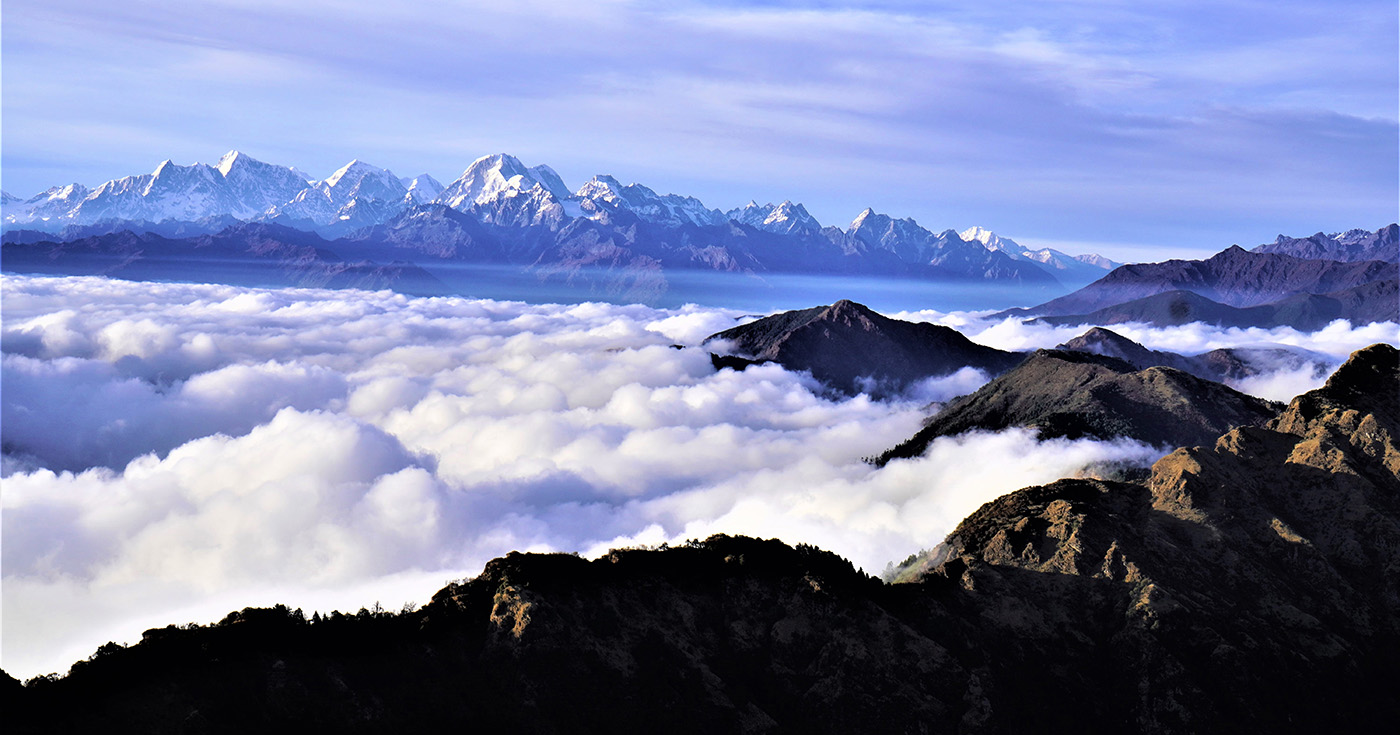
Pikey Peak Trek
The Trek Sir Edmund Hillary Called His Favourite
Every trekker knows Kala Patthar. Most know Gokyo Ri. Very few know Pikey Peak. That particular imbalance is curious, because the man who first stood on top of Everest — Sir Edmund Hillary himself — said that Pikey Peak offers the finest view of Everest he had ever seen. Not from base camp. Not from the summit. From a relatively modest hill in the lower Solu region, barely visited and entirely without hype.
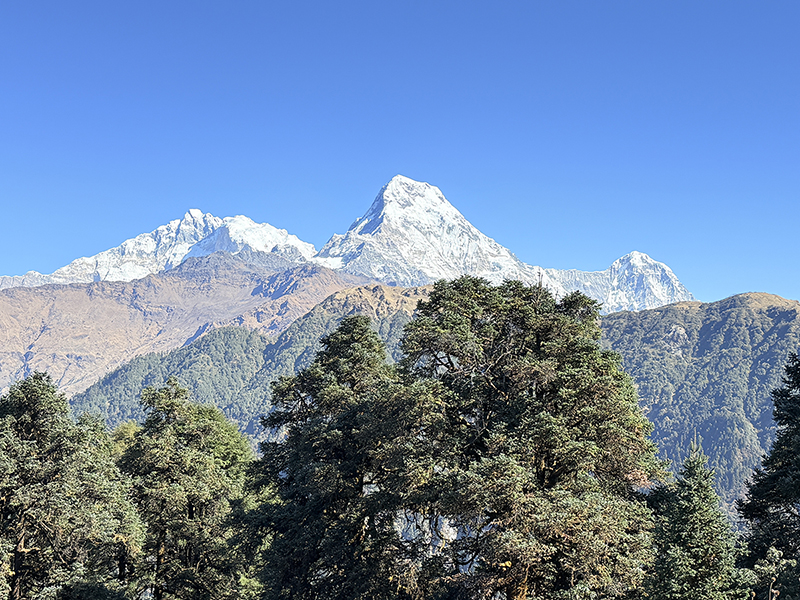
Pikey Peak stands at 4,065 metres in the Solu Khumbu district of eastern Nepal — the lower, southern part of the Everest region, well before the crowds thin into the classic Khumbu corridor. It sits within the Gaurishankar Conservation Area, part of the Great Himalayan Trail, and delivers a panoramic arc of Himalayan summits that includes seven of the world’s fourteen 8,000-metre peaks: Everest, Lhotse, Makalu, Cho Oyu, Kanchenjunga, Dhaulagiri, and Manaslu. From a single vantage point on a clear morning, you see more high peaks simultaneously than from almost anywhere else in Nepal.
What makes Pikey Peak different from the other treks in this series isn’t altitude or remoteness — it’s accessibility. The trek requires no domestic flights (you can drive to the trailhead), no restricted area permits, no glacier crossings, and no prior high-altitude experience. It takes 7 to 11 days depending on your pace and which itinerary you choose. It’s a trek that sits squarely within reach of people who would otherwise dismiss Nepal as requiring more time or fitness than they have.
And because it sits off the main Everest corridor, the trail is quiet. The villages are genuine. The cultural immersion is the kind that disappears once a trail becomes popular. Pikey Peak is popular enough to have good teahouses along the route; it is not yet popular enough to have lost what makes it worth walking.
Why Sir Edmund Hillary Said This
Hillary’s endorsement of Pikey Peak as his favourite Everest viewpoint is often repeated but rarely explained. The reason relates to geometry and distance. From Pikey Peak’s summit at 4,065 m, you are standing roughly 80 kilometres south of Everest in a direct line. At that distance, the mountain’s proportions are fully visible — you see the entire massif, not just the upper pyramid. The surrounding peaks of Lhotse, Nuptse, Makalu, and the Khumbu Himalaya frame it on all sides.
From Kala Patthar at 5,545 m — the standard ‘Everest viewpoint’ — you are much closer and much higher, which means you see the upper sections of Everest in intimate detail but lose the broader panoramic context. Hillary’s preference for Pikey Peak reflects the judgement of someone who had seen the mountain from every possible angle and understood that the most complete picture of Everest comes from a distance, not from proximity.
That endorsement has quietly become one of the most compelling pieces of marketing copy in Nepali trekking — not because it was manufactured for effect, but because it’s a genuine opinion from the most credible source imaginable. It also happens to be accurate. Trekkers who stand on Pikey Peak on a clear morning, particularly at sunrise, consistently describe the view as something they weren’t expecting and could not easily describe to anyone who hadn’t seen it.
Trek at a Glance
| Duration | 7–11 Days (8 days is the most common full itinerary) |
| Maximum Altitude | 4,065 m / 13,336 ft (Pikey Peak Summit) |
| Trek Start | Dhap (2,850 m) — reached by 8–9 hr jeep drive from Kathmandu |
| Trek End | Phaplu (2,380 m) — return to Kathmandu by jeep (8–9 hrs) or short flight (~35 min) |
| Total Trek Distance | Approximately 57–60 km |
| Difficulty | Moderate — suitable for fit beginners; no prior high-altitude experience needed |
| Daily Walking | 4–7 hours per day |
| Best Seasons | March–May, October–November; possible year-round for experienced trekkers |
| No Flights Required | Drive Kathmandu to Dhap — no Lukla flight dependency or weather delays |
| Permits Required | Gaurishankar Conservation Area Permit + TIMS Card |
| Accommodation | Teahouses throughout — basic at Dhap and Jhapre, better at Junbesi and Phaplu |
| Cost (approximate) | USD $350–$900 depending on operator, group size, and inclusions |
| Part of | Great Himalayan Trail — the route passes through one of Nepal’s longest trekking corridors |
Pikey Peak vs Everest Base Camp — A Direct Comparison
For trekkers weighing their options, this table cuts through the noise.
| Factor | Pikey Peak Trek | Everest Base Camp Trek |
| Duration | 7–11 days | 12–16 days |
| Max altitude | 4,065 m | 5,545 m (Kala Patthar) |
| Lukla flights | Not required — drive to start | Required (weather-dependent) |
| Permits | Approx. $35–$40 total | Approx. $37–$52 total |
| Trail crowds | Very quiet — few hundred trekkers/year | Tens of thousands/year |
| Cost | ~$350–$900 | ~$1,000–$2,000+ |
| Everest view | Full panoramic view (Hillary’s favourite) | Close-up summit pyramid view |
| Cultural depth | Rich Sherpa / Solu villages, uncrowded | More commercialised above Namche |
| Difficulty | Moderate — beginner-friendly | Moderate to Challenging |
| AMS risk | Low — max altitude 4,065 m | Significant above 4,500 m |
| Best for | Time-limited / first-time / budget trekkers | Complete Khumbu immersion seekers |
Day-by-Day Itinerary (Standard 8-Day Route)
The standard 8-day version runs from Kathmandu to Dhap by road, traverses the trail through Jhapre, Pikey Peak Base Camp, the summit, Jasmane Bhanjyang, and Junbesi, and exits at Phaplu. Highlighted days are the summit day and the key monastery visit at Junbesi.
| Day | Route | Altitude | Duration |
| Day 1 | Kathmandu — arrival, trip briefing, gear check | 1,400 m | — |
| Day 2 | Drive Kathmandu → Dhap Bazaar | 2,850 m | 8–9 hrs drive |
| Day 3 | Trek Dhap → Jhapre | 2,900 m | 5–6 hrs |
| Day 4 | Trek Jhapre → Pikey Peak Base Camp | 3,640 m | 5–6 hrs |
| Day 5 | Summit Pikey Peak (4,065 m) → descend to Jasmane Bhanjyang | 3,530 m overnight | 6–7 hrs |
| Day 6 | Trek Jasmane Bhanjyang → Junbesi | 2,700 m | 5–6 hrs |
| Day 7 | Junbesi — visit Thupten Chholing Monastery + explore village | 2,700 m / 3,020 m hike | 3–4 hrs hike |
| Day 8 | Trek Junbesi → Phaplu → drive or fly to Kathmandu | 2,380 m → 1,400 m | 5 hrs trek + drive/flight |
Shorter versions (6–7 days) skip the Junbesi monastery day. Longer versions (10–11 days) add side trips to Thupten Chholing Gompa as a full day, Chiwong Monastery at Phaplu, and occasionally Salleri — the district headquarters of Solukhumbu. The 8-day itinerary strikes the best balance between pace, cultural depth, and time efficiency.
Day-by-Day Breakdown
Day 1: Kathmandu — Arrival and Preparation
Day one is logistics and orientation. Your operator meets you at Tribhuvan International Airport and transfers you to Thamel. The evening is used for permit processing, a briefing with your guide, equipment check, and any last purchases from Kathmandu’s gear shops. A Kathmandu heritage walk is optional if you arrive early. Sleep well — the jeep to Dhap leaves before dawn.
Day 2: Drive Kathmandu to Dhap Bazaar (2,850 m)
A long but rewarding day on the road. The jeep departs Kathmandu between 5:00 and 6:00 AM, heading east through the Kathmandu Valley and then southeast on the Araniko and BP Highways through Sunkoshi before turning north into the Solukhumbu hills. The road climbs steadily through terraced hillsides, dense subtropical forest, and a series of ridge-top villages with expanding mountain views. Dhap Bazaar sits at 2,850 m — a small trading settlement at the start of the Pikey Peak trail. By arrival, usually late afternoon, the air is cool and the hills are quiet. Check in to the lodge, eat well, and rest.
This is one of Pikey Peak’s most underrated advantages: no Lukla flight booking, no 5:00 AM airport queue, and no risk of sitting in Kathmandu for three days because weather has closed the airport. You drive. You go.
Day 3: Dhap to Jhapre (2,900 m)
The first trekking day eases you in gently. From Dhap, the trail follows a mix of road sections and footpath through pine and rhododendron forest, passing small Sherpa and Tamang settlements with traditional stone houses and mani walls. The first views of the Numbur Himal section of the Himalaya appear to the north as you gain height. Jhapre is a small village at roughly the same elevation as Dhap, making this a relatively flat introduction to the terrain. Teahouses here are basic but adequate — this is still a low-traffic trail and the lodges reflect that. The simplicity is the point.
Day 4: Jhapre to Pikey Peak Base Camp (3,640 m)
The longest sustained climb of the trek. From Jhapre the trail heads directly upward through increasingly dense forest — rhododendron, birch, and fir — on a well-defined path that gains nearly 750 metres of elevation over the course of the day. As the treeline thins and the trail emerges onto open ridge terrain, the Himalayan panorama begins to reveal itself in stages: first the Numbur massif, then the Khumbu peaks to the northeast, and eventually — on a clear afternoon — the distinctive pyramid of Everest itself appearing above the eastern ridgelines.
Pikey Peak Base Camp sits at 3,640 m in an open meadow on the southern flank of the peak. A handful of stone and timber teahouses serve the passing trekkers, with yak grazing in the surrounding pastures and unobstructed sky in every direction. Sleep here tonight — early bed means early rise for the summit.
Day 5: Summit Day — Pikey Peak (4,065 m) and Descent to Jasmane Bhanjyang (3,530 m)
Rise before first light. The ascent from base camp to the summit takes 1.5 to 2.5 hours depending on pace, gaining just over 400 metres on a steep but straightforward trail. There is no technical terrain, no glacier, no rope — just a good ridge path in the pre-dawn dark, with your headlamp cutting through the cold air and the mountains slowly revealing themselves in the growing light.
Reach the summit at or just before sunrise. What happens in the next 20 to 30 minutes is why this trek exists. The panorama from the top of Pikey Peak at dawn spans an almost unbroken arc from west to east: Dhaulagiri (8,167 m) to the far west, followed by Annapurna, Manaslu, Ganesh Himal, Langtang, Gauri Shankar, Cho Oyu (8,188 m), Everest (8,849 m), Lhotse (8,516 m), Makalu (8,481 m), and Kanchenjunga (8,586 m) to the far east. In exceptional conditions, this single viewpoint encompasses seven of the world’s fourteen 8,000-metre peaks. The Numbur Himal range frames the foreground. Below, the Solu valley is still in deep shadow.
Sunrise on Pikey Peak is not a gradual brightening. It is a specific moment when the light hits the upper snows of Everest and the mountain turns from grey to gold to brilliant white over the course of about three minutes. Hillary was right.
After the summit, descend back to base camp for breakfast, then continue down the other side of the ridge to Jasmane Bhanjyang (also spelled Jase Bhanjyang) at 3,530 m. The descent is steep in sections with good views of the Solu valley opening below. Overnight at Jasmane Bhanjyang.
Day 6: Jasmane Bhanjyang to Junbesi (2,700 m)
A descent day through beautiful forest. From Jasmane Bhanjyang the trail drops into dense rhododendron and oak canopy, passing through Taktor village before opening into the broad, pastoral Junbesi valley. The trail here briefly intersects with the historic Jiri to Everest Base Camp route — the same path used by early Everest expeditions before the Lukla airstrip was built, and by trekkers who want to walk the full historic trail from the roadhead at Jiri.
Junbesi itself is one of the finest villages on the entire trek — arguably in all of Nepal’s middle hills. It sits at 2,700 m in a wide valley with a clear river, traditional Sherpa stone houses, a central gompa with a large prayer wheel, and a relaxed pace of life largely undisturbed by trekking traffic. The Sherpa, Magar, and Tamang communities here have retained a cultural authenticity that’s increasingly rare on the busier Khumbu routes. The teahouse selection is the best on the circuit.
Day 7: Junbesi — Thupten Chholing Monastery and Village Exploration
This day is the cultural centrepiece of the trek and one of the most rewarding in this entire series of guides. Take a morning hike up to Thupten Chholing Monastery (also Thuptenchholing Gompa), a Tibetan Buddhist monastery perched at 3,020 m on the hillside above Junbesi. The monastery was founded in the 1960s by His Holiness Trulshik Rinpoche, one of the most respected Tibetan Buddhist teachers of the twentieth century, and today houses several hundred monks and nuns in a working monastic community.
The ascent from Junbesi takes about 90 minutes at an easy pace through forest and past chortens. The monastery complex is architecturally impressive — traditional Tibetan design decorated with colourful murals, prayer flags, and the sound of chanting audible from the main path. Trekkers are welcome to attend prayer sessions (remove shoes, remain quiet, do not photograph during ceremonies). The views of the Junbesi valley and the surrounding peaks from the monastery courtyard are outstanding.
Return to Junbesi for lunch, then spend the afternoon exploring the village — the central gompa, the prayer wheel, the local market if you arrive on market day, and the farmhouses on the valley floor. This is slow travel at its best. The evening meal at the teahouse and an early night.
Day 8: Junbesi to Phaplu — Trek and Return to Kathmandu
The final trekking day follows the Junbesi Khola downstream through mixed forest and farmland, crossing a steel suspension bridge over the river at Beni Ghat before climbing slightly to reach Phaplu at 2,380 m. The walk takes approximately 5 hours and is almost entirely downhill — a gentle conclusion to the circuit.
Phaplu is a larger settlement with a small airstrip, several teahouses and lodges, and the impressive Chiwong Monastery perched on the hillside above town. If your flight or jeep departs the following morning, an evening visit to Chiwong is worthwhile. The monastery hosts the Mani Rimdu festival each autumn — a three-day Sherpa religious celebration of masked dances and rituals that draws participants from villages throughout the Solu.
Return to Kathmandu from Phaplu either by jeep (8–9 hours, departing early morning) or by the 35-minute domestic flight to Kathmandu (seasonal service, approximately USD $100–$125). The flight is weather-dependent but scenic beyond description — a low-level pass over the foothills with the Everest massif visible in the distance. If the flight operates, take it.
Top Highlights of the Trek
- Pikey Peak Summit (4,065 m) — Sir Edmund Hillary’s declared favourite Everest viewpoint; panoramic arc spanning seven 8,000-metre peaks from Dhaulagiri to Kanchenjunga
- Sunrise from the summit — one of the finest dawn mountain spectacles in Nepal, with Everest and surrounding peaks lit gold in sequence from east to west
- No Lukla flights required — drive to the trailhead from Kathmandu; no flight delays, cancellations, or weather holds
- Thupten Chholing Monastery (3,020 m) — a living Tibetan Buddhist monastic community above Junbesi, founded by His Holiness Trulshik Rinpoche; one of the most significant monasteries in the Everest region
- Junbesi village — one of the most authentic and beautiful Sherpa villages in Nepal’s middle hills, at the historic crossroads of the Jiri-to-EBC trail
- Gaurishankar Conservation Area — rich biodiversity including red panda, Himalayan black bear, clouded leopard, and an exceptional range of Himalayan bird species
- Solu Khumbu cultural diversity — Sherpa, Tamang, Rai, and Magar communities in consecutive villages; traditional lifestyles largely intact due to low trekking traffic
- Great Himalayan Trail — Pikey Peak sits on this 1,700 km trail crossing the full length of Nepal; a section of true long-distance trekking heritage
- Budget-friendly — among the most cost-effective mountain panorama treks in Nepal, with total package costs well below comparable Khumbu routes
- Year-round possibility — while spring and autumn are optimal, the moderate maximum altitude makes winter trekking viable for experienced trekkers
Difficulty and Fitness
The Pikey Peak Trek is rated moderate and is genuinely accessible to first-time trekkers with a reasonable base level of fitness. It is the most beginner-friendly trek in this series. The maximum altitude of 4,065 m is significant enough to produce mild altitude symptoms in some trekkers but is well below the threshold where serious AMS becomes common. The trail is well-defined, the teahouses are adequate, and the daily walking distances are manageable.
The steepest section is the ascent from Jhapre to Pikey Peak Base Camp on day four and the summit push on day five. Neither is technically difficult — both are simply sustained uphill walks on rocky trail. Trekking poles help on the descent from Jasmane Bhanjyang to Junbesi, which is steep and occasionally loose.
Preparation: 6–8 weeks of cardiovascular training is sufficient for most people. Regular hikes or hill walks with a daypack, combined with some stair or incline training, will prepare you adequately. No prior trekking experience is strictly required, though anyone who has done a multi-day walk anywhere will find the daily rhythm familiar.
Children and older adults: The Pikey Peak Trek is genuinely suitable for families with older children (10 and above, depending on fitness) and for trekkers in their 60s and beyond who maintain an active lifestyle. The absence of extreme altitude, the availability of the jeep exit from Phaplu, and the relatively short daily stages all make this one of the most inclusive itineraries in the Himalayan trekking calendar.
Permits and Documentation
Compared to the restricted and complex permit requirements of routes like Kanchenjunga or the Everest High Passes, Pikey Peak is refreshingly straightforward.
- Gaurishankar Conservation Area Entry Permit — approx. NPR 3,000 (~USD $22). Checked at the entry point near Dhap.
- TIMS Card (Trekkers’ Information Management System) — approx. NPR 2,000 (~USD $15). Required for all trekking routes.
Total permit cost: approximately USD $35–$40. Both permits are arranged in Kathmandu before departure. Your operator will handle this; confirm it’s included in your package cost. Carry originals at all times — checkpoints are positioned at several points along the trail.
No restricted area permit, no minimum group size requirement, and no mandatory guide requirement under current regulations — though hiring a guide is strongly recommended for the cultural context and navigation above Pikey Peak Base Camp.
Best Time to Go
- March to May (spring): Optimal. Rhododendron forests between Dhap and Pikey Peak Base Camp are in full bloom — the trail passes through some of the densest and most colourful rhododendron stands in the Solu region. Stable weather, good mountain clarity, mild temperatures. March and April are particularly recommended.
- October to November (autumn): Equally excellent. Post-monsoon clarity delivers the sharpest mountain views from the summit. October and early November are the most popular months. The trail is at its best-maintained and teahouses are fully staffed.
- December to February (winter): Possible and surprisingly enjoyable for prepared trekkers. Snow can dust the upper trail sections above Jhapre, particularly the approach to Pikey Peak Base Camp. The summit views in winter are exceptional on clear days — cold, crisp air and an almost completely empty trail. Bring a sleeping bag rated to -15°C and plan for cold nights at base camp. Not recommended without prior cold-weather experience.
- June to September (monsoon): The Solu region receives heavy monsoon rainfall, making trails slippery and leeches prevalent in the lower forest sections. Views from the summit are blocked for most of the season. Not recommended for first-time trekkers. Experienced trekkers who don’t mind wet conditions find the lower trail’s lush green landscape striking.
A unique advantage: unlike the Lukla-dependent treks, Pikey Peak’s road access from Kathmandu is largely weather-independent. Even during marginal spring or autumn conditions, you can still get to the trailhead. This makes it a more reliable itinerary for trekkers with fixed return flights and limited schedule flexibility.
Accommodation
- Dhap Bazaar (2,850 m): Simple but clean teahouses. Basic private rooms, shared bathrooms, limited menu. Good local food.
- Jhapre (2,900 m): Similar standard to Dhap. Adequate for a night. The lodge owners are typically Sherpa or Tamang families who run their teahouses as a side enterprise to farming.
- Pikey Peak Base Camp (3,640 m): Stone and timber lodges in a meadow setting. Basic rooms, communal dining with yak-dung heating stove, limited menu primarily dal bhat, noodles, and eggs. Shared bathrooms. Bring a sleeping bag liner for extra warmth — it gets cold at this elevation overnight.
- Jasmane Bhanjyang (3,530 m): Small lodges, basic facilities. One or two options. Functional overnight stop.
- Junbesi (2,700 m): Best accommodation on the circuit. Several teahouses with private rooms, some with attached bathrooms. Better menu selection including fresh vegetables from local gardens. Hot water available at some lodges (usually solar-heated). Wi-Fi at the better teahouses.
- Phaplu (2,380 m): Comfortable lodges, better facilities, some mid-range options. Good food. The largest settlement on the circuit.
Meals across the route follow the standard teahouse menu — dal bhat with unlimited refills, pasta, noodles, fried rice, soups, and eggs. Junbesi’s teahouses are notable for locally grown vegetables and occasionally excellent home cooking from Sherpa hosts who’ve been feeding trekkers for decades. Bring sufficient Nepali Rupee cash from Kathmandu — there are no ATMs on the trail between Dhap and Phaplu.
How Much Does It Cost?
| Category | Approximate Cost (USD) |
| Budget (independent trekking, shared jeep) | $200–$400 |
| Mid-range with local guide (8 days) | $450–$700 |
| Full operator package (guide, porter, accommodation) | $650–$900 |
| Shared jeep: Kathmandu–Dhap (one way) | $15–$25 per person |
| Private jeep: Kathmandu–Dhap / Phaplu–Kathmandu | $180–$250 one way (full vehicle) |
| Phaplu–Kathmandu domestic flight (seasonal) | ~$100–$125 per person |
| Both permits (KCAP + TIMS) | ~$37 total |
| Guide (licensed, 8 days) | $120–$180 total |
| Porter (optional, 8 days) | $90–$140 total |
| Tipping (guide + porter) | $10–$15 per day per person |
The Pikey Peak Trek is Nepal’s most cost-effective mountain panorama experience. The absence of domestic flight dependency removes the single largest unpredictable cost from most Nepal trek budgets. For trekkers who are comfortable in teahouses and happy to travel by shared jeep, the full circuit — flights to/from Kathmandu, permits, guide, accommodation, and meals — can be completed for well under USD $500.
What to Pack
Clothing
- Moisture-wicking base layers (merino wool or synthetic) — the temperature range from Kathmandu (warm) to Pikey Peak Base Camp (cold nights) requires adaptable layering
- Fleece mid-layer and a lightweight down jacket — essential above Jhapre and at Pikey Peak Base Camp overnight
- Waterproof jacket and trousers — afternoon cloud and rain are common, particularly in spring
- Trekking trousers — zip-off style useful for the warm lower sections
- Warm hat, light gloves, sun hat, neck gaiter
- Trekking boots — broken in and waterproof; ankle support helpful for the descent from Jasmane Bhanjyang
- Camp shoes or sandals for teahouse evenings
Gear
- Trekking poles — particularly valuable on the steep descent from Pikey Peak to Jasmane Bhanjyang
- Daypack (20–25 litres) — if using a porter for the main bag
- Sleeping bag (comfort rated to -5°C or lower) — essential at Pikey Peak Base Camp; a liner adds flexibility
- Headlamp with spare batteries — the summit ascent begins before dawn
- Sunglasses with UV400 protection — summit glare at altitude is significant
- High-SPF sunscreen and lip balm
- Water purification tablets or Steripen — treat water above Jhapre
- Insulated water bottle — water can be cold enough to make standard bottles uncomfortable at base camp
- Personal first aid kit: blister pads, Ibuprofen, antihistamine, re-hydration salts, antiseptic
- Portable power bank — electricity is available but unreliable at base camp and Jasmane Bhanjyang
- Sufficient Nepali Rupee cash for the full circuit — no ATMs between Dhap and Phaplu
Health and Altitude
The Pikey Peak Trek’s maximum altitude of 4,065 m is high enough for mild AMS symptoms to appear in some trekkers — typically headache, mild fatigue, or disrupted sleep at Pikey Peak Base Camp. These are manageable with rest, hydration, and pacing. The ascent profile is gradual enough that serious AMS is uncommon on this route.
- Drink 2–3 litres of water per day throughout the trek. Mild dehydration is the most common cause of headaches at altitude.
- Avoid alcohol on the night before and the morning of the summit day. It dehydrates and impairs performance.
- If headache appears at base camp, rest and don’t ascend further that evening. Summit the following morning after a full night’s sleep if symptoms have resolved.
- Diamox (Acetazolamide) is not typically required for Pikey Peak given the moderate altitude, but trekkers who have experienced AMS on previous trips at lower elevations should discuss prophylactic use with a GP before departure.
- Travel insurance covering trekking and basic evacuation is recommended — though the jeep exit from Phaplu makes road evacuation a realistic option for most medical situations on this route.
Leeches are present in the forest sections between Dhap and Jhapre during and immediately after the monsoon season (roughly June to early October). Wear long socks, apply DEET to boot tops, and check regularly. Above Jhapre the trail is leech-free.
Guide and Porter
A guide is not legally mandatory on the Pikey Peak Trek — unlike restricted area routes such as Kanchenjunga. However, hiring one is strongly recommended for several good reasons: the trail above Jhapre has sections that are less clearly marked, the cultural context of the villages and monasteries is substantially richer with a knowledgeable local interpreter, and the teahouse logistics (especially at Pikey Peak Base Camp, which fills up fast in peak season) are smoother with someone managing the bookings ahead.
A porter is optional but sensible. The daily elevation change means your pack weight matters more on this trek than on routes with gentler terrain. A porter carrying your main bag while you carry a light daypack transforms the physical experience of the summit day significantly.
Both guide and porter should be booked through a licensed Kathmandu operator or through the guide’s registered agency. Agree on the daily rate, meal arrangements, accommodation, and equipment provision before departure.
Frequently Asked Questions
Can I do the Pikey Peak Trek without a Lukla flight?
Yes — this is one of the trek’s primary advantages. The trailhead at Dhap is reached by a jeep drive from Kathmandu (8–9 hours). No domestic flights are required to start the trek. For the return, you either drive from Phaplu (8–9 hours) or take a short 35-minute flight from Phaplu’s small airstrip back to Kathmandu if the seasonal service is operating. The entire trip can be completed without touching a small aircraft if you prefer road travel.
Is this trek suitable for families with children?
Yes, with appropriate planning. Children aged 10 and above with reasonable physical fitness handle this trek comfortably. The moderate altitude (4,065 m maximum), manageable daily distances, and well-serviced teahouses make it one of the most family-accessible Himalayan treks available. Pace conservatively, build in rest stops, watch for altitude symptoms at base camp, and carry paediatric altitude medication if recommended by your doctor.
Why did Sir Edmund Hillary say Pikey Peak has the best Everest view?
Hillary’s endorsement relates to the viewing distance and angle. From Pikey Peak at roughly 80 km from Everest, you see the entire mountain in context — the full massif, the surrounding peaks of Lhotse, Nuptse, and the Khumbu range, and the sweep of the Himalaya from west to east. From closer viewpoints like Kala Patthar, you see more of the upper mountain in detail but lose the panoramic scale. Hillary had seen Everest from every conceivable angle; his preference for Pikey Peak reflects an aesthetic judgement about which view best represents the mountain’s full grandeur.
What is the Great Himalayan Trail?
The Great Himalayan Trail (GHT) is a 1,700 km trekking route that traverses the full length of Nepal from Kanchenjunga in the east to Humla in the far west. The Pikey Peak route forms part of the lower GHT corridor through the Solu Khumbu region, connecting to the Jiri-to-Everest historic route at Junbesi. Trekkers on the full GHT pass through Junbesi on their way across the middle hills — which means the Pikey Peak itinerary briefly joins one of the great long-distance walking routes in Asia.
What is Thupten Chholing Monastery?
Thupten Chholing (also Thuptenchholing Gompa) is a Tibetan Buddhist monastery perched at 3,020 m above Junbesi, founded in the 1960s by His Holiness Trulshik Rinpoche following the Tibetan exodus. It houses several hundred monks and nuns in an active monastic community. The monastery is one of the most significant Nyingma Buddhist sites outside Tibet and is architecturally and spiritually impressive. Trekkers are welcome to visit during non-ceremony hours; morning puja begins at dawn and is the most atmospheric time to arrive.
Is it possible to extend the trek toward Everest Base Camp from Phaplu?
Yes. Phaplu is connected to the historic Jiri-to-EBC trail and has an airstrip that provides access further into the Khumbu. From Phaplu, experienced trekkers can continue walking toward Salleri, Lukla, and eventually the main EBC corridor — transforming the Pikey Peak itinerary into the beginning of a longer Khumbu circuit. This extension adds 5–10 days depending on the specific route chosen and is an excellent option for trekkers who arrive at Phaplu and realise they want more.
Final Word
The trekking world has a tendency to rank experiences by difficulty and altitude — as if the only valid Himalayan trek is the longest and highest one you can physically endure. The Pikey Peak Trek quietly dismantles that assumption. It’s shorter than EBC. Lower than Gokyo Ri. Cheaper than almost anything else in the Everest region. And from its 4,065-metre summit at sunrise, it offers a view of the mountains that the man who stood on top of Everest himself called the best he’d ever seen.
No flights. Minimal permits. A trail that’s genuinely peaceful. Monasteries that function as monasteries rather than tourist attractions. Villages that haven’t adjusted their rhythms around trekking traffic. And at the end of it, a jeep back to Kathmandu or a short mountain flight that puts you in the city by lunchtime.
For first-time trekkers, the Pikey Peak is an ideal introduction to Himalayan travel. For experienced trekkers who’ve done EBC and Gokyo, it’s the trek they should have done first — and an excellent reason to come back.
Recent Posts