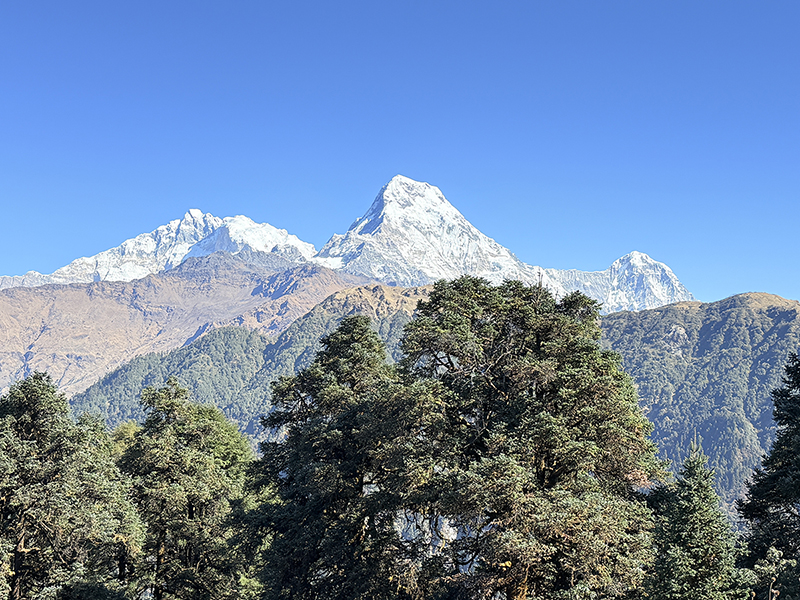
Tea House Trekking in Nepal: Walk In, Eat Local, Sleep Simple
Most people who trek Nepal for the first time expect the mountains. They don’t expect the woman at the Langtang tea house who remembers every guest’s breakfast order without writing anything down, or the porter who knows which rhododendron trail blooms two weeks before the main route does.
That’s what tea house trekking actually is. Not a curated wilderness experience. An immersion into how mountain Nepal functions day to day.
You walk established trails through living villages, not around them. Lunch happens in someone’s kitchen. Sleep happens in a room above it. The Himalayas are the backdrop, but the texture of the trip comes from the people running these lodges, often the same families who’ve hosted trekkers for three generations.
What Tea House Trekking Actually Involves
Every night, you stop at a local tea house or mountain lodge along the route. Your trek leader handles the logistics, booking rooms, coordinating meals, navigating the trail plan around weather and altitude. You carry a daypack. That’s it.
The network of tea houses spans nearly every major trekking corridor in Nepal, from the Annapurna Circuit to the Rolwaling Valley. Some lodges have solar-heated showers and extensive menus. Others have a single gas burner, a wood stove in the common room, and a dal bhat that beats anything you’d find at a Kathmandu restaurant. Quality varies, but your guide knows the difference.
Expect clean rooms and hot water at most stops. In higher, more remote sections, chimneys get scarce, wood smoke drifts through walls, and blankets do most of the work. None of this is a flaw. It’s the honest reality of lodges operating at 4,000 meters.
Why the Flexibility Matters
Unlike expedition-style camping treks, tea house trekking doesn’t lock you into a fixed daily distance. You can slow down in Ghandruk to watch rice terraces catch the afternoon light. You can push further on a strong acclimatization day. Your pace, your call.
Because food and accommodation get arranged locally, you’re injecting money directly into the communities you’re walking through, not into a central operator’s account. The woman cooking your thukpa, the lodge owner hauling firewood up a 2,000-step trail, the kid selling oranges outside Tatopani. Your trip funds them directly.
The Terrain Beyond the Peaks
The trail doesn’t just deliver mountain views. Depending on the route and season, you’ll move through dense rhododendron forests that turn entire hillsides red and pink from March through May. Through oak woodlands where Himalayan tahrs cross paths without much concern for trekkers. Through villages where the architecture shifts from Gurung to Tamang to Sherpa as you gain altitude and change valleys.
Birdlife alone gives serious birders a reason to slow down. Nepal sits inside one of Asia’s richest migration corridors. Over 900 species, with the forests between 2,000 and 3,500 meters particularly active in spring.
The Point Most Itineraries Miss
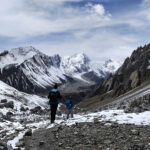
Tea house trekking isn’t a way to see Nepal’s mountains from a comfortable distance. It’s a way to move through Nepal at the speed of its people. You eat what the locals eat, walk what they walk, sleep where the trail ends for the day.
The cultural access this format provides is something no resort or helicopter tour can replicate. Conversations happen naturally over shared dining tables. You understand how a village at 3,800 meters sources its vegetables, manages its waste, educates its children, in ways that don’t come from guidebooks.
That’s the actual draw. The mountains are extraordinary. The people running these tea houses, in some of the most logistically difficult terrain on earth, are more so.
“To walk in nature is to witness a thousand miracles.” By Mary Davis
A Typical Day on a Tea House Trek in Nepal
Nobody warns you that the hardest part of a tea house trek isn’t the altitude. It’s leaving the dining room.
By 6:30 am, the smell of butter tea and woodsmoke has already taken over the lodge. Trekkers who swore they’d be on trail by seven are still nursing second coffees, arguing about whether the clouds over the col will clear. Usually they do. Usually you leave late anyway.
Breakfast runs simple: bread with jam, porridge, muesli, eggs cooked however you want them. Nothing extraordinary, but after a cold night at altitude, it lands like a proper meal. Eat well. The morning section earns it.
Morning: The Serious Hours
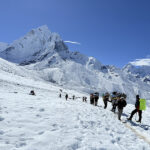
The first three to four hours of walking are where you actually move. Legs are fresh, light is good, trail traffic is manageable. This is when you gain elevation, cross passes, or push through the longer valley sections. Your guide sets the pace, but tea house trekking doesn’t run on a military schedule. You stop when the view demands it, when a herd of yaks crosses the path, when someone’s knee needs a minute.
Lunch hits around midday, usually at a lodge mid-route. Dal bhat if you’re smart. It refills for free, and nothing else on the menu will carry you through the afternoon the way fermented lentils and rice will. The Nepali runners who move supplies up these same trails eat it twice a day without variation.
Afternoon: Shorter, Slower, Better
Post-lunch trekking is gentler. Two to three hours, mostly descent or flat traverse, designed to get you into the next village while daylight is still useful. Your lodge for the night is already arranged. The pressure is off.
Afternoon tea happens around 3:30 or 4:00 pm in the lodge dining room, usually near the wood stove that the lodge owner has already started feeding for the evening. This is when the day loosens up. Boots come off. Wet socks get draped over whatever surface is nearest to the heat.
The remaining hours before dinner are genuinely yours. Some people walk the village, watching how it operates, which fields are being worked, which monastery is actually open, which local family has a card game running that you can join if you ask right. Others read. Others do laundry in cold water and hang it somewhere optimistic.
Evening: Where the Trek Actually Lives
Dinner in a tea house dining room is communal in a way that doesn’t happen on camping treks. You’re sharing tables with people from entirely different routes who ended up at the same lodge. A Dutch couple doing Annapurna Circuit. Two Koreans who’ve been trekking for three weeks. A solo traveler from Bangalore who knows the lodge owner’s uncle.
Menus lean Nepali and Tibetan, with Western options that get less reliable the higher you go. Thukpa, fried rice, momos, pasta, the occasional apple pie that’s genuinely excellent. Your guide usually eats with the kitchen staff, but the line between staff and guest dissolves pretty quickly by the third evening.
Cards come out after dinner. Or conversation. Or both. Trekkers who met at breakfast are exchanging phone numbers by 9 pm.
Sleep comes early and hard. Rooms are cold. Sleeping bags earn their weight ratings. By 10 pm, the lodge is quiet.
Then the alarm goes off at 6:30 and you do it again.
Why Tea House Trekking Works
The format has dominated Nepal trekking for decades for reasons that hold up under scrutiny.
No gear weight. You carry a daypack. The lodge provides a bed, the kitchen provides food, your porter handles everything else. Compared to a full camping trek, you’re moving with maybe a third of the load.
Direct economic impact. Every meal you eat, every room you sleep in, every cup of tea you buy goes to the family running that lodge. Not a central operator. Not a Kathmandu office. The lodge owner hauling vegetables up from the lower village at 5 am.
Menu freedom. Camping treks feed you what the cook prepared for the group. Tea houses give you a menu. When you’ve been trekking for nine days and you want mashed potatoes instead of rice, that choice exists.
Flexibility. Bad weather, a bad knee, an unexpectedly good rest day in a village you weren’t planning to stop in. Tea house itineraries bend. Camping logistics don’t.
Social access. You eat with locals. You meet other trekkers. Some of the best conversations happen in a lodge dining room at 4,500 meters, between people who have exactly one thing in common and find out it’s enough.
Safety infrastructure. Your guide knows which lodges have reliable hot water, which routes are overloaded with traffic, which altitude profiles need an extra acclimatization day built in. The network of lodges functions as a support system across the entire route.
The History Behind the Tea House Network
The modern tea house trail has a specific origin point. In 1964, Jimmy Roberts ran the first commercial trek in Nepal through Mountain Travel. Early expeditions moved on full camping support, the same logistical model mountaineering expeditions used.
What changed things was the Hippie Trail. Through the late 1960s and into the 1970s, travelers moving through Kathmandu, centered around Freak Street in the old city, started wandering into the hills. Some stayed in local homes. Village families started setting aside rooms. Those rooms became lodges. By the 1980s, a functional network of tea house lodges had been built across every major trekking corridor in Nepal.
What started as informal hospitality is now a structured industry. But the bones of it, walking into a stranger’s home, eating their food, sleeping under their roof, haven’t changed much.
Food at Tea Houses: What to Actually Expect
Popular routes like Everest Base Camp or Annapurna Circuit have lodges running full menus, apple pie, wood-fired pizza, espresso in places that surprise you. The dining room has a stove in the middle. You pick from the menu. You pay per item unless you’re on an all-inclusive package.
Get higher or further off the main trail, and menus simplify. Dal bhat becomes less of a choice and more of a strategy. Supply chains at altitude run on porter loads and yak trains, so food costs more and selection shrinks. Even so, the prices stay reasonable given what it takes to get anything up there.
One consistent recommendation: eat at the lodge where you’re sleeping. Guides know which kitchens are clean. Ordering meals elsewhere splits the economic benefit and occasionally creates friction with your accommodation.
Rooms and Facilities: Honest Assessment
Lodge quality tracks directly with trail traffic and altitude. The Everest Base Camp route has lodges running thirty or more rooms with attached bathrooms, solar-heated showers, and Wi-Fi via Everest Link prepaid cards. These aren’t hotels, but they’re not rough either.
Go higher, or pick a quieter trail, and the formula shifts. Standard setup is twin beds with foam mattresses in an unheated room, shared bathrooms down the hall, a squat toilet if you’re above 4,000 meters. The dining room has the only heat source, usually wood at lower elevation, dried yak dung above treeline.
Bring a sleeping bag rated for lower than you think you’ll need. Bedding isn’t provided. The sheet on the mattress is there for hygiene, not warmth.
Hot showers exist at most lodges. In larger villages like Namche Bazaar, solar systems handle it properly. Higher up, you may get a bucket of warm water. Manage expectations accordingly and the reality doesn’t disappoint.
Electricity is broadly available for charging devices. Wi-Fi exists in most lodges on popular routes, with varying speeds that correlate roughly with altitude.
Popular Tea House Trek Routes in Nepal
Everest Region
- Everest Base Camp Trek, 15 days
- Everest Gokyo Lake Trek, 14 days
- Everest High Passes Trek, 19 days
- Everest Panorama Trek, 11 days
Annapurna Region
- Annapurna Base Camp Trek, 11 days
- Annapurna Circuit Trek, 15 days
- Jomsom Muktinath Trek, 10 days
- Ghorepani Poonhill Trek, 9 days
- Mardi Himal Trek, 11 days
Langtang & Central Nepal
- Langtang Valley Trek, 9 days
- Gosainkunda Trek, 10 days
- Tamang Heritage Trek, 10 days
Manaslu Region
- Manaslu Circuit Trek, 13 days
- Manaslu Base Camp Trek, 15 days
- Manaslu Tsum Valley Trek, 20 days
Restricted Area Treks
- Upper Mustang Trek, 16 days
Recent Posts