Trekking in Nepal with a Local Agency: What You Actually Get
There’s a version of Nepal trekking that looks like this: you land in Kathmandu, spend three days figuring out which permits you need, discover the Tims card office moved, argue with a taxi driver about the price to Lukla check-in, and show up to the trailhead already exhausted before the altitude gets its turn.
Then there’s the other version.
A local trekking agency absorbs all of that before you clear customs. By the time you’re walking, the only thing on your list is walking.
That’s the practical argument. But it’s not the whole one.
The Local Knowledge Gap Is Real
Nepal has over 30 recognized trekking routes, restricted area permits that require specific agency sponsorship, trails that shift after monsoon, tea houses that closed last season, and altitude profiles that punish people who planned their acclimatization using outdated information from a forum post.
A Kathmandu-based agency that has been running these routes for years doesn’t work from the same information you can find on a travel blog. They know which section of the Manaslu Circuit gets dangerously icy in late October. They know the lodge at Thorong Phedi that looks fine on booking photos but hasn’t been the same since the 2015 earthquake. They know which guide grew up in the Khumbu and which one is good on paper but has never been above 4,000 meters.
That’s not something you can research your way into from abroad. It accumulates from actually being there.
First-Time Nepal Trekkers: The Case Is Straightforward
If this is your first time in Nepal, the trail system will disorient you in ways that don’t show up in trip reports. Trail markers are inconsistent. Altitude affects judgment before most people recognize it’s happening. Permit checkpoints have specific requirements. The difference between a correct acclimatization schedule and an aggressive one is the difference between summiting and being evacuated.
A licensed local guide handles all of this as a matter of routine. They’ve watched hundreds of trekkers make the same mistakes, and their job is to make sure you don’t. That’s not a sales pitch. That’s what the job is.
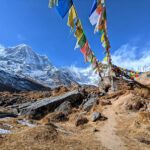
Beyond logistics, a local guide provides something no app can: real-time cultural context. When you walk through a Sherpa village above Namche, or pass through a Gurung settlement in the Annapurna foothills, understanding what you’re looking at, the significance of the chorten at the trail junction, why the prayer flags are strung in that specific pattern, why the entire village appears empty during a particular week in November, that’s the difference between trekking through Nepal and actually being in it.
What a Local Agency Actually Organizes
The logistics list is longer than most people expect before they’ve done it once.
Permits. Depending on your route, you may need a TIMS card, a national park permit, a conservation area permit, a restricted area permit, and in some cases a special restricted area permit that requires agency processing. The Manaslu Circuit, Upper Mustang, Dolpo, and Nar Phu Valley all fall into the restricted category. These can’t be obtained independently.
Guides and porters. A reputable local agency assigns certified guides with wilderness first aid training and altitude sickness response experience. Porters are hired with proper contracts, insurance, and load limits. This matters more than it sounds; the trekking industry has a documented history of porter welfare issues, and working with a responsible agency is the direct way to not contribute to them.
Accommodation. On popular routes, lodge beds fill during peak season. October in the Khumbu is not the time to be figuring out tonight’s accommodation at 4 pm after a long climb. Your agency pre-books. You walk in.
Transfers and logistics. Kathmandu airport pickup, domestic flight to Lukla or Pokhara, road transfers to trailheads. Coordinated before arrival.
Emergency support. This is the one that matters most and gets discussed least. If you develop high-altitude pulmonary edema above Lobuche, your guide calls the agency. The agency coordinates helicopter evacuation, contacts your insurance provider, communicates with your emergency contact. You are not managing any of that yourself.
The Flexibility Argument
A common concern: booking through an agency means a rigid itinerary with no room to move.
The opposite is true with a good local operator. Because your guide has ground-level authority, adjustments happen in real time. Weather closes a pass. An extra rest day makes sense. You want to divert to a viewpoint the standard itinerary skips. A local guide handles all of this without a chain of approval emails to a foreign head office. They make the call on the trail.
Operators who’ve spent years running custom and tailor-made itineraries are built specifically for travelers who don’t want to walk the same route at the same pace as everyone else. That flexibility is the product.
The Money Goes Where It Should
This is worth saying directly. When you book through a Kathmandu-registered local agency, the economic activity stays in Nepal. Your guide’s salary. Your porter’s day rate. The agency staff who handled your permit paperwork. The local lodge bookings the agency prioritizes.
When you book through a foreign outfitter who subcontracts to a Nepal operator, a percentage of what you paid leaves the country before the trek starts. The trek is often identical. The economic distribution isn’t.
Nepal’s trekking industry is the primary income source for tens of thousands of mountain-community families. The routing of that money matters.
What to Look for in a Local Trekking Agency
Not every Thamel storefront constitutes a serious operator. The markers that distinguish a reliable agency:
Government registration. Legitimate agencies are registered with the Nepal Tourism Board and are members of TAAN (Trekking Agencies’ Association of Nepal). These aren’t formalities. They’re the baseline.
Licensed guides. Government-licensed trekking guides have completed formal training including altitude sickness recognition, first aid, and route certification. Ask directly. A reliable agency answers without hesitation.
Transparent pricing. A trustworthy quote itemizes costs: guide fees, porter fees, permits, accommodation, meals, transport. Suspiciously low lump-sum quotes usually mean something is being cut, often guide quality or porter welfare.
Real reviews from verifiable sources. Not five-star summaries on the agency’s own website. Actual detailed reviews on independent platforms from trekkers who name their guide, describe their route, and talk about how problems were handled when they came up.
Communication before you book. An agency that asks detailed questions about your fitness level, prior altitude experience, timeline, and preferences before quoting you a package is operating correctly. One that sends a price list by return email without asking anything is not.
The Honest Bottom Line
You can trek independently in Nepal. The major routes are walkable without a guide. Some experienced trekkers prefer it. But the access, safety infrastructure, cultural depth, logistical coverage, and direct economic benefit of working with a quality local agency represent a different category of experience.
The mountains are the same either way. What surrounds them isn’t.
Recent Posts